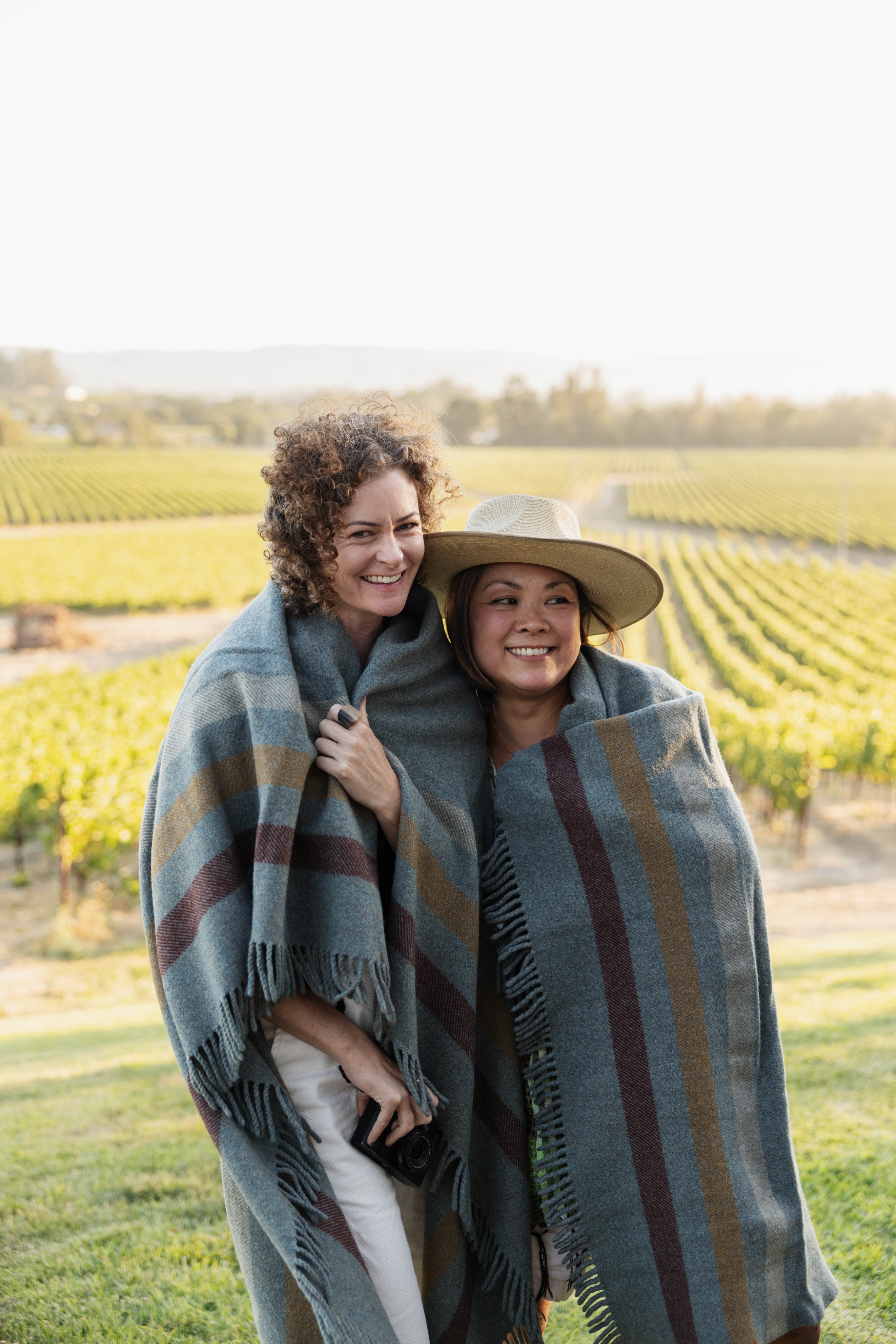
The Future Collective brought Let’s Get Deep: The Future of the Wine Industry to Scribe Winery, gathering Sonoma Valley leaders to discuss the future of the region’s wine industry, land, businesses, and cultural identity.
The evening brought together Andrew Mariani, co-founder of Scribe Winery; Martha Stoumen, founder of Martha Stoumen Wines; Rodrigo Soto, proprietor of Far Mountain Wine; John Hamel of Hamel Family Wines; and Joel Peterson, founder of Ravenswood Winery and Once and Future Wines. Alison Seibert, founder of The James Collective, moderated the discussion.
Peterson reflected on the industry’s evolution: “We wanted to be the good guys and do meaningful work to make Sonoma Valley a better place for all, and have fun while doing it.” He added, “I hope our thoughts and actions from around 30 years ago...give you something to build on to make the wine business and our community a better place for the next 30 years.”
Soto emphasized the responsibility of land ownership: “Owning land today doesn’t come with entitlement,” and called the shift “from entitlement to responsibility” a necessary evolution. Hamel discussed his family’s move toward sustainable farming: “When we started to dry farm, we started to see a totally different expression in the wines. The plants have to be connected to that place.”
On wine’s role in Sonoma’s identity, Mariani said, “Wine is culture. It’s hard to think about wine without it,” adding, “Wine without culture would be a corporate, commoditized industrial product.” He also noted, “Vineyards can be so much more than just places that farm or grow fruit. They can be, like they are tonight, a classroom for thinkers, a place for community, for food, for art.”
Stoumen highlighted the importance of supporting the next generation: “How are we passing down knowledge to the next generation, and maybe not just our children, maybe sharing it with the community?” She added, “There are so many people out there who have this great idea, who have planned it out, who are young, who have everything except the land and the capital,” and, “If you meet one of those people, listen to them. What feels like an enormous opportunity to someone starting out might be a small risk for you.”
Soto called for greater collaboration across the region: “We need to have a united front. We need to think collaboratively. We need to think appellation first, brand second, not the other way.” Hamel concluded, “The wine industry is in a super fragile moment,” adding, “What exists on the other side of this is really going to be based on what people here support, the values that you have as consumers.”
Kim Jones, founder of The Future Collective, said, “The Future Collective is definitely not the only group thinking about these issues. We will keep these conversations going in ways that center a younger generation, but will act in collaboration with other groups.”
The discussion was filmed and will be released later this year as an episode of Arable, a documentary series that profiles more winemakers, farmers, and small business owners who are reshaping relationships between land, labor, and community in the region.
The Future Collective is sponsored by Sonoma Valley Catalyst Fund, a fund of the Community Foundation Sonoma County focused on solutions to problems in Sonoma Valley that no single organization or person can solve alone. Learn more about The Future Collective at www.thefuturecollective.org.
If you are interested in watching or listening to this discussion, please click HERE.
Image credit: Kayla Schmah