The PR Net Future Focus 2026 Conference Recap
On April 24th, The PR Net hosted its fourth annual Future Focus Conference, a full day summit that brought together global leaders across media, marketing, technology, and communications to explore the bold ideas, technologies, and strategies shaping the future of the industry. With 300 senior executives in attendance and nine forward looking panel discussions, the event offered a platform for critical dialogue, practical insights, and invaluable networking.
Friday, April 24th, 2026
1221 6th Ave, New York, NY 10020
Recordings Now Available
Digital recordings of all nine Future Focus 2026 sessions are available for purchase for $49. Access the full day of insights from 30+ industry leaders at your own pace.
Included sessions:
1. Who Owns Influence Now? The New Media Power Structure
2. Content Commerce & Performance PR: Where Influence Meets Revenue
3. From Social Listening to Cultural Intelligence (Presented by Edelman)
4. The Future of Brand Reputation: Signals & Strategies to Supercharge Your Gut Instinct (Presented by Citizen Relations)
5. From Experience to Impact: The New Rules of Experiential Marketing
6. The State of PR in 2026 (Presented by Meltwater)
7. AI in MarComms: What to Automate, What to Protect, and What Leaders Must Decide Now
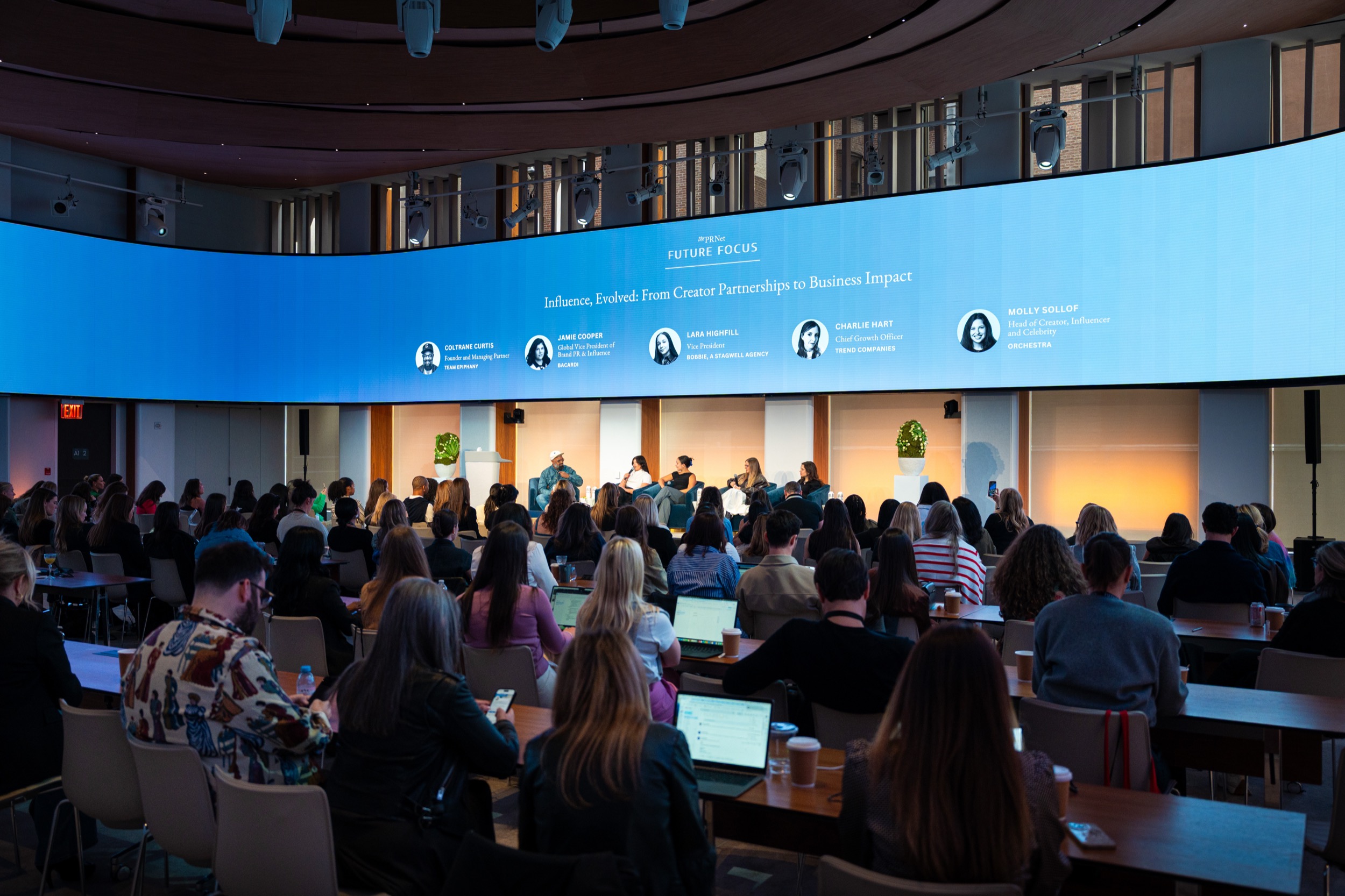
8. Influence, Evolved: From Creator Partnerships to Business Impact
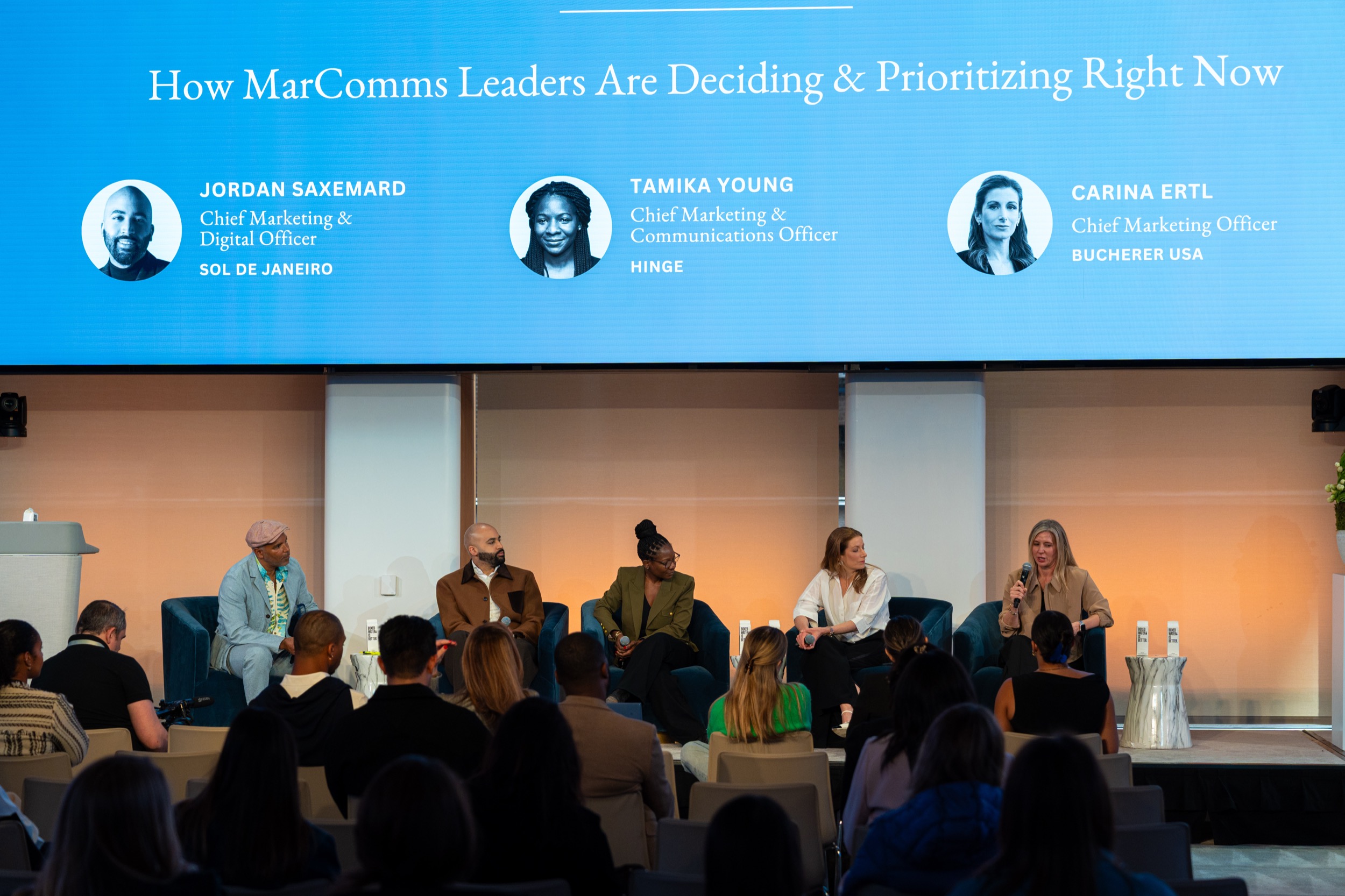
9. How MarComms Leaders Are Deciding & Prioritizing Right Now
Featuring leaders from OpenAI, Bacardi, Reddit, TikTok, Hinge, WPP, Sol de Janeiro, Volvo Cars, Heineken USA, Edelman, Hachette Book Group, The New York Times Wirecutter, Hasbro, and more.
Session 1
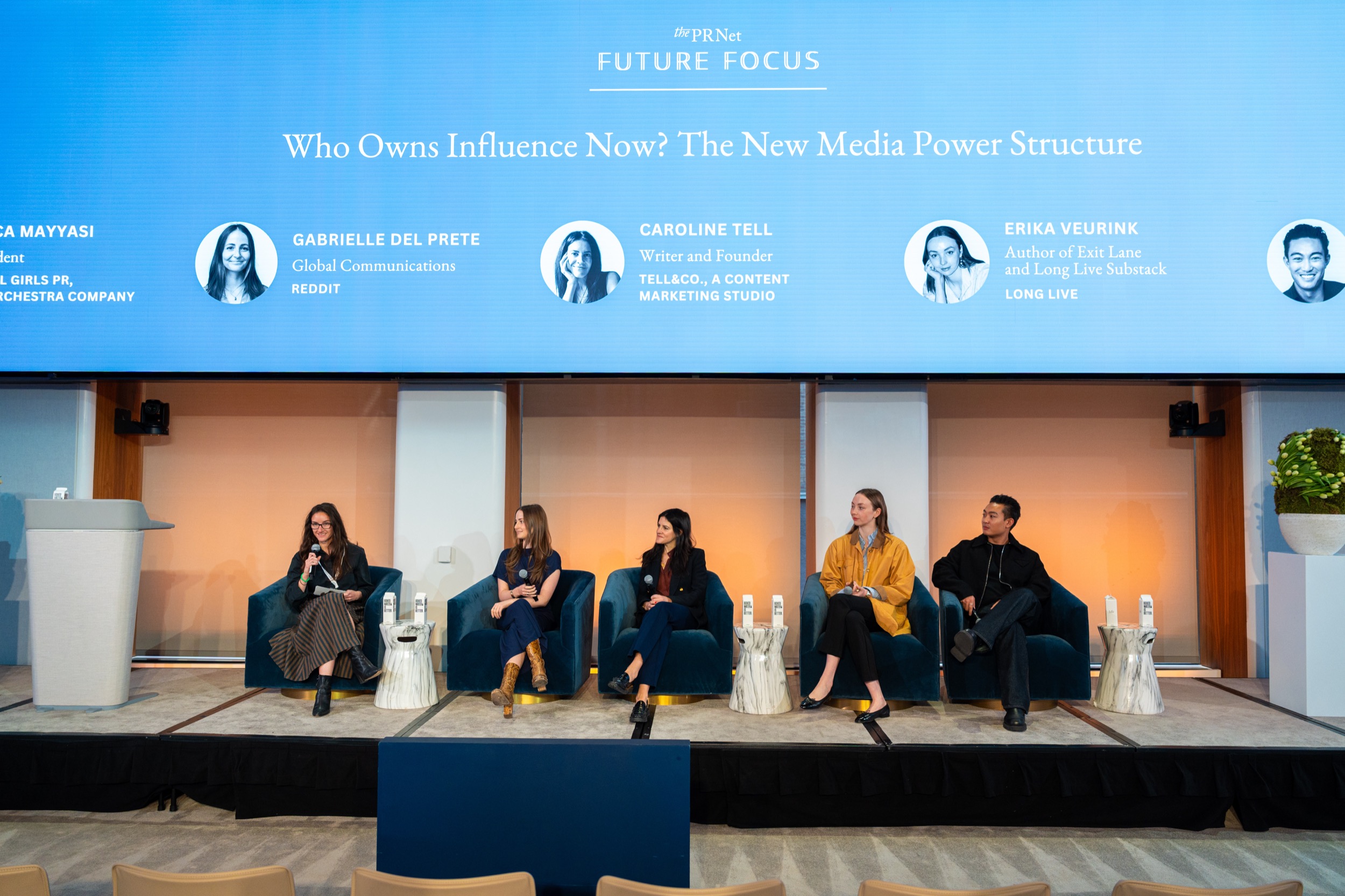
Who Owns Influence Now? The New Media Power Structure
Panelists: Gabrielle Del Prete, Senior Communications Manager, Reddit; Erika Veurink, Substack Editor & Freelance Writer, Long Live; Caroline Tell, Founder, Tell & Co.; David Kang, Global Product Marketing Lead, TikTok. Moderated by Erica Mayyasi, President, Small Girls PR (an Orchestra company).
The day began with a look at how authority is being redistributed across legacy media, creators, and communities, and what brands must do to navigate a fragmented influence landscape.
"We are no longer operating in a media landscape with one clear gatekeeper. Influence is distributed, trust is more personal and the brands that win are the ones that understand how a story travels." — Erica Mayyasi
Caroline Tell added that power is now broadly held: "I think that everyone has the power now, right? It's just a question of what that power indicates. I think legacy media still holds tremendous value... and then as we move further down the funnel into actual conversion and consumer behavior, that's where increasingly we're seeing influencer, creator, community play."
David Kang pointed to where credibility now lives: "It's not about who owns the power... it's really who has community trust, who has consumer trust, and I think right now that is held in the hands of creators."
Gabrielle Del Prete underscored the role of peer communities: "The people we trust the most right now are our friends, and the second most are random strangers on the internet... especially when you're looking for really nuanced, real world experience." Erika Veurink closed on transparency: "I don't really think editorial independence has gone away. I think the difference is it's way more transparent now... and creators have to be way more explicit about disclosure because their own business is on the line."
Session 2
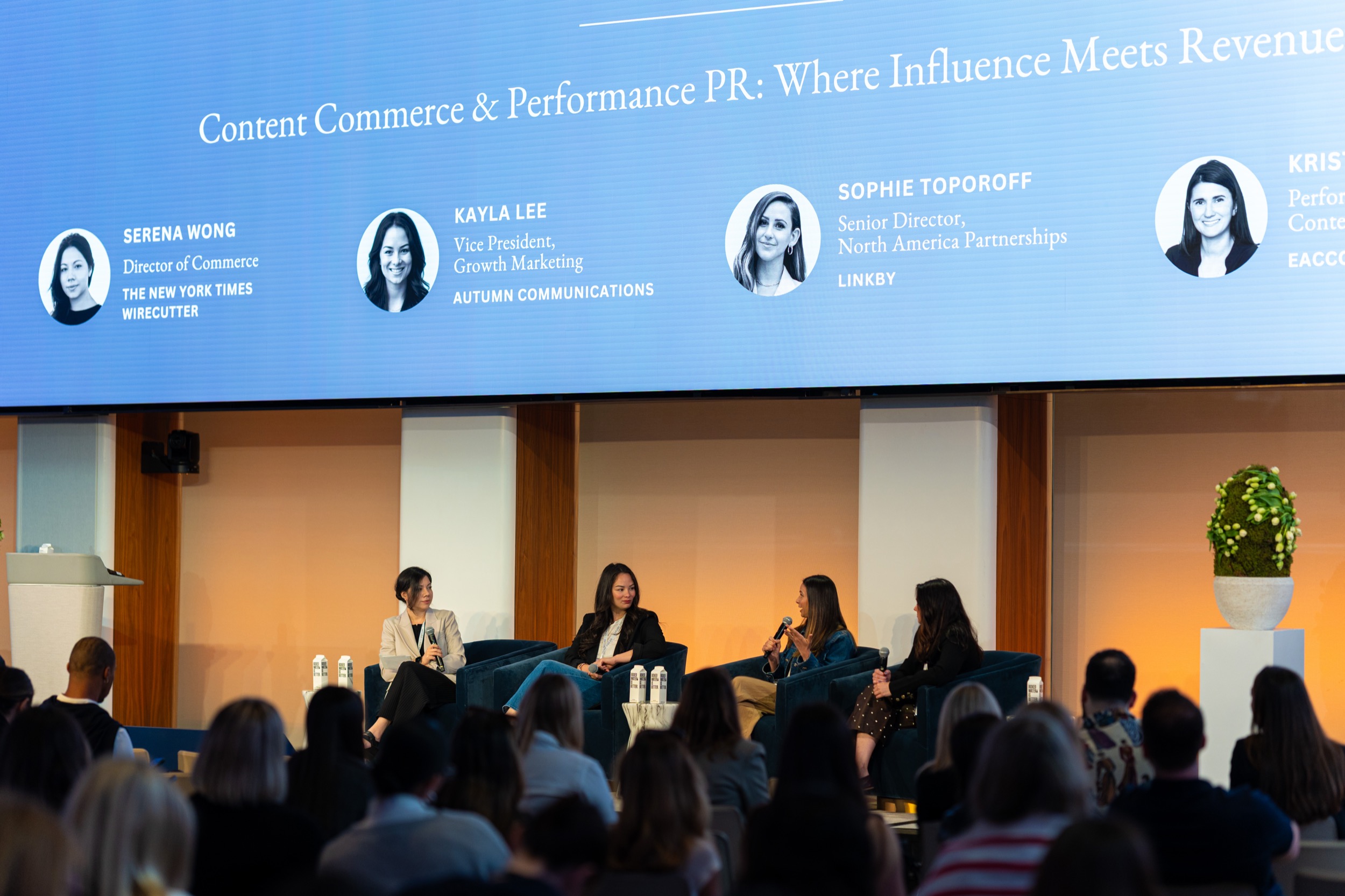
Content Commerce & Performance PR: Where Influence Meets Revenue
Panelists: Kayla Lee, Vice President of Growth Marketing, Autumn Communications; Sophie Toporoff, Senior Director, North America Partnerships, Linkby; Kristin Flohr, Performance PR Director, eAccountable. Moderated by Serena Wong, Director of Commerce, The New York Times Wirecutter.
The next session focused on how earned, affiliate, and content strategies are converging into a single, measurable ecosystem.
"If you only look at the final click, you're missing the forest for the trees." — Serena Wong
Kayla Lee framed the integration imperative: "As the landscape continues to shift, the most impactful move brands can make is integrating affiliate marketing as a complementary strategy to ongoing PR efforts. This approach strengthens measurement alongside credibility, enhances reporting (especially as LLMs evolve) and enables stronger partner advocacy to ensure they are supporting a full funnel journey."
Kristin Flohr added on editorial as a credibility play: "One of the most important things right now is to note that editorial is still a holistic strategy. When you're looking at the publishers you're targeting, you want credibility and impact. The biggest and most exciting change is that we can be collaborators on how these pieces are driving impact." Sophie Toporoff closed on measurement: "I think the lines between organic and paid are a lot blurrier than people realize. At Linkby, we're already on a cost per click, so your content and your editorial coverage is already performance driven. It's measurable, and so it really can inform those bigger paid media budgets."
Session 3 — Presented by Edelman
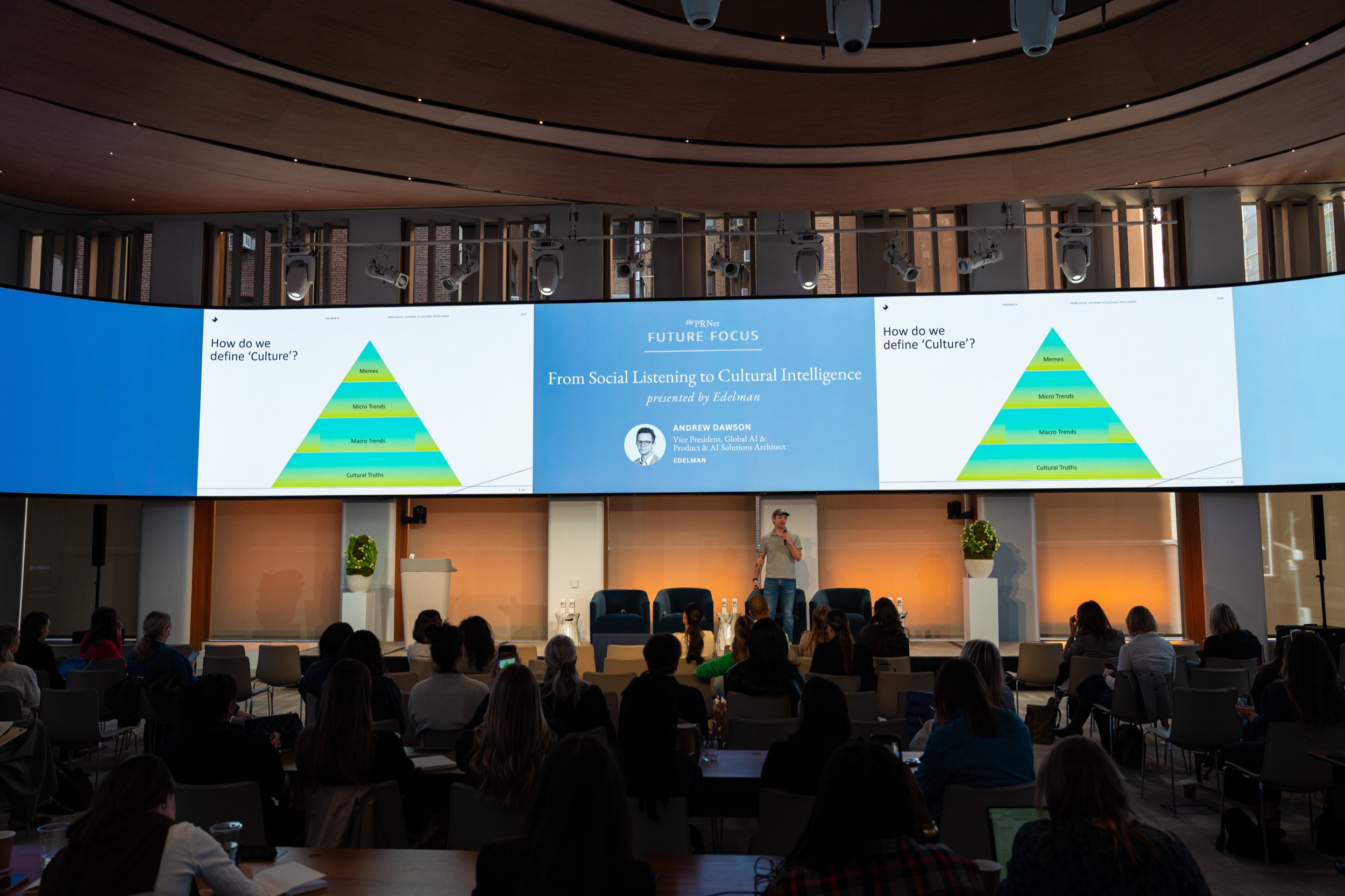
From Social Listening to Cultural Intelligence
Presenter: Andrew Dawson, Vice President, AI Solutions Consultant, Edelman.
Andrew Dawson explored why volume and sentiment dashboards are no longer enough, and how brands can move toward genuine cultural understanding.
"My belief is that we should all be striving to live in what I call the shadow of the second hand. We want to be right behind culture. We want to understand it in real time, see it fall out, see how people react to it, and see how consumers respond to it." — Andrew Dawson
He pushed past traditional listening metrics: "I don't really care about who, what, when, or where. Those are great questions, they're very novel, but they're optimized for detection, not understanding. I care about how and why. It's the only two things I care about now, because that's where culture lives." And he tied cultural relevance directly to behavior: "People want to see themselves reflected in brands. They want to understand that a brand understands them. That's why being culturally relevant, and understanding the moment, is so important. It's not just theory; it changes behavior."
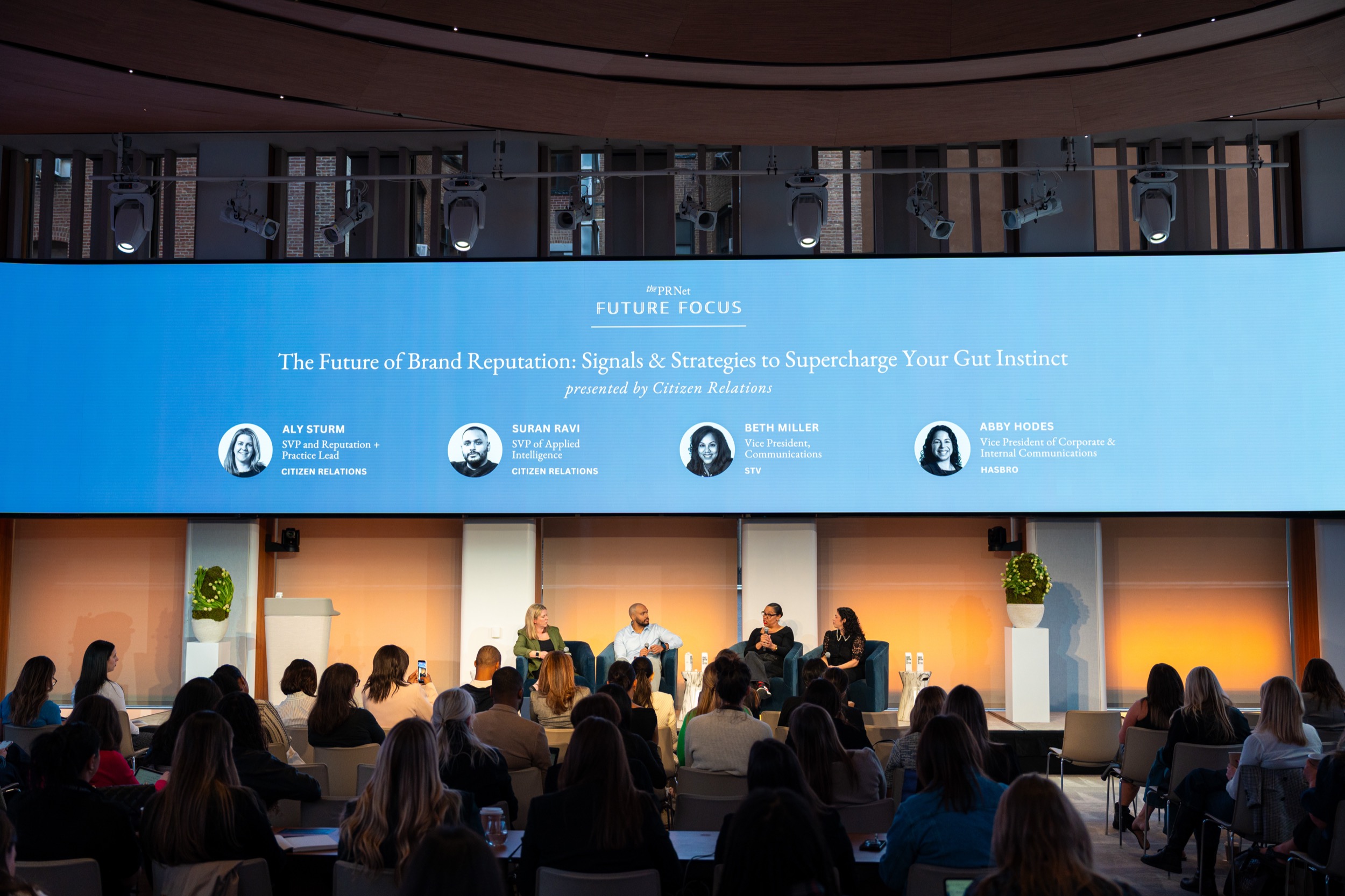
Session 4 — Presented by Citizen Relations
The Future of Brand Reputation: Signals & Strategies to Supercharge Your Gut Instinct
Panelists: Suran Ravi, SVP of Applied Intelligence, Citizen Relations; Beth Miller, Head of Communications, STV; Abby Hodes, Vice President, Corporate & Internal Communications, Hasbro. Moderated by Aly Sturm, SVP & Reputation+ Practice Lead, Citizen Relations.
Panelists tackled how organizations can manage reputation at social speed, in an environment where traditional playbooks no longer keep up.
"The reality is, the playbooks that we were used to really haven't kept up with the speed and the complexity of the world today." — Aly Sturm
Beth Miller shared how data can also justify restraint: "When you have that data that shows employees aren't talking about this, clients are not talking about this, it's not in the press, then you can push back and you can say, we really don't need to do anything. But you still have to provide that escalation plan: if this happens, then we will do that."
Abby Hodes described how shared language reduces confusion under pressure: "We've given every campaign a risk rating so we all have a common language... and we tell teams, see something, say something. Don't hide things because you're afraid; surface them so we can figure out together if it's going to be a crisis." Suran Ravi closed on the gap between monitoring and intelligence: "The difference between having the data source and then having intelligence or intelligence signals is a very big divide... data is one part of it, but it's what you do with the data that's super important."
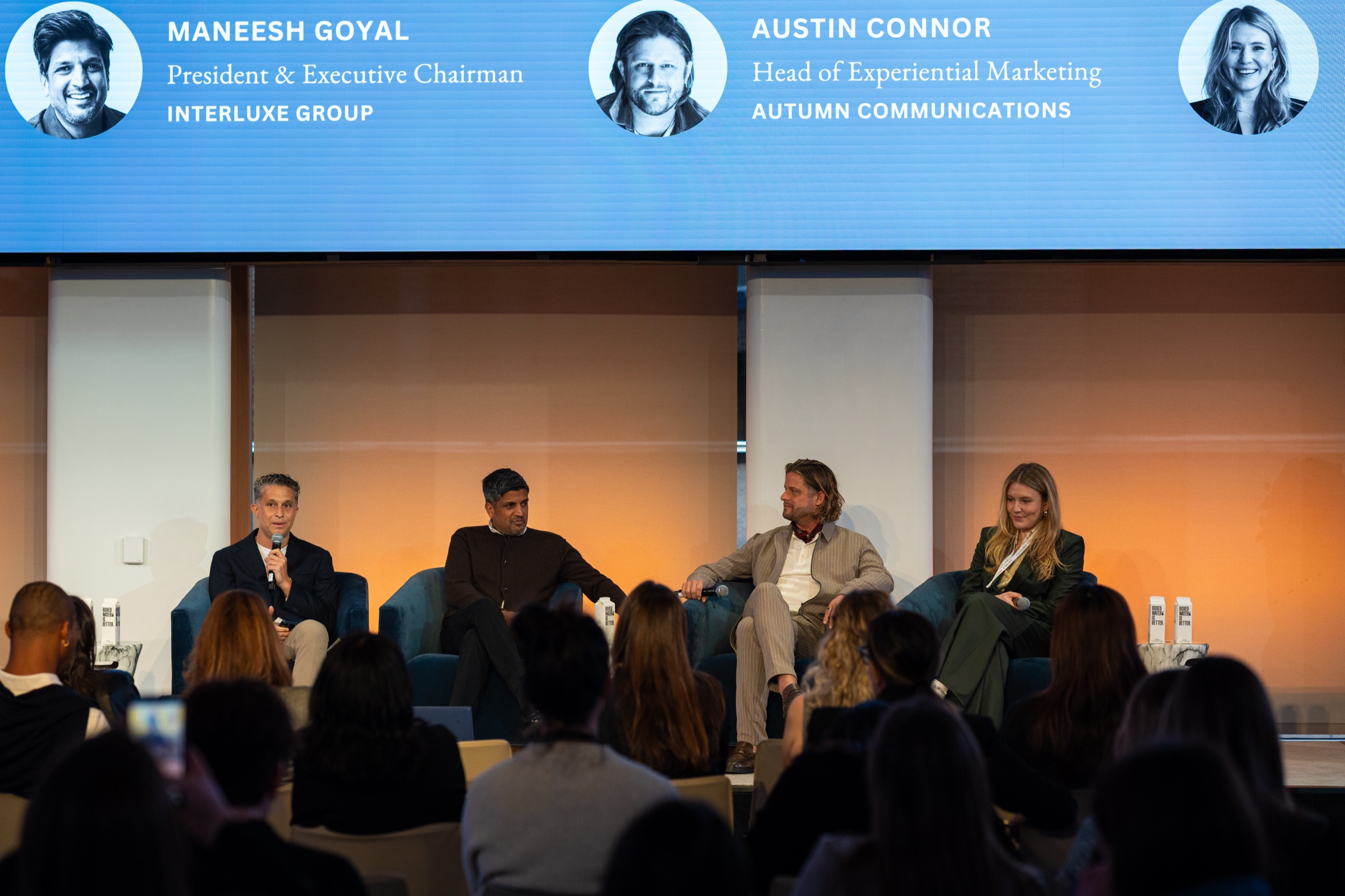
Session 5
From Experience to Impact: The New Rules of Experiential Marketing
Panelists: Maneesh Goyal, President & Executive Chairman, Interluxe Group; Austin Connor, Head of Experiential Marketing, Autumn Communications; Dasha Zhivaykina, Director of Events, Polar Black. Moderated by Brian Feit, Founding Partner, BMF.
This panel examined how experiential has matured into a core strategic channel built on human connection.
"Brands are people too, and by definition, people want to be loved and people want to be seen and people want to be cared for... There's no better way to humanize a brand than through an event." — Maneesh Goyal
Brian Feit set the tone for the realities of live work: "With events, something will always go wrong, and it's really in the pivot and how you handle that that matters the most." Maneesh Goyal added on the value of being present: "You got to show up. You got to get into the rooms... I have found that the best connections are made when you actually take the time to show up in a room."
Austin Connor pushed brands to design for sensorial connection rather than content capture: "If you want to get content, have a photo shoot. These activations are meant to have human connection, and that should be priority number one, always." He continued: "It doesn't just have to be give away a latte and a lipstick and send them on their way... there's ways for us to have them experience brands in much more sensorial ways."
Dasha Zhivaykina closed on longevity and community: "You need to see events not as a standalone sort of moment, but looking at how they actually sit within the wider campaign and support it... a one off project is never going to be good enough, because it doesn't have any longevity, and this is why comms/PR and production need to work closely together." She also noted on Gen Z and luxury: "With Gen Z specifically, they just don't buy luxury anymore for the sake of buying luxury. So they really go after brands that create communities... where they can actually feel like they belong."
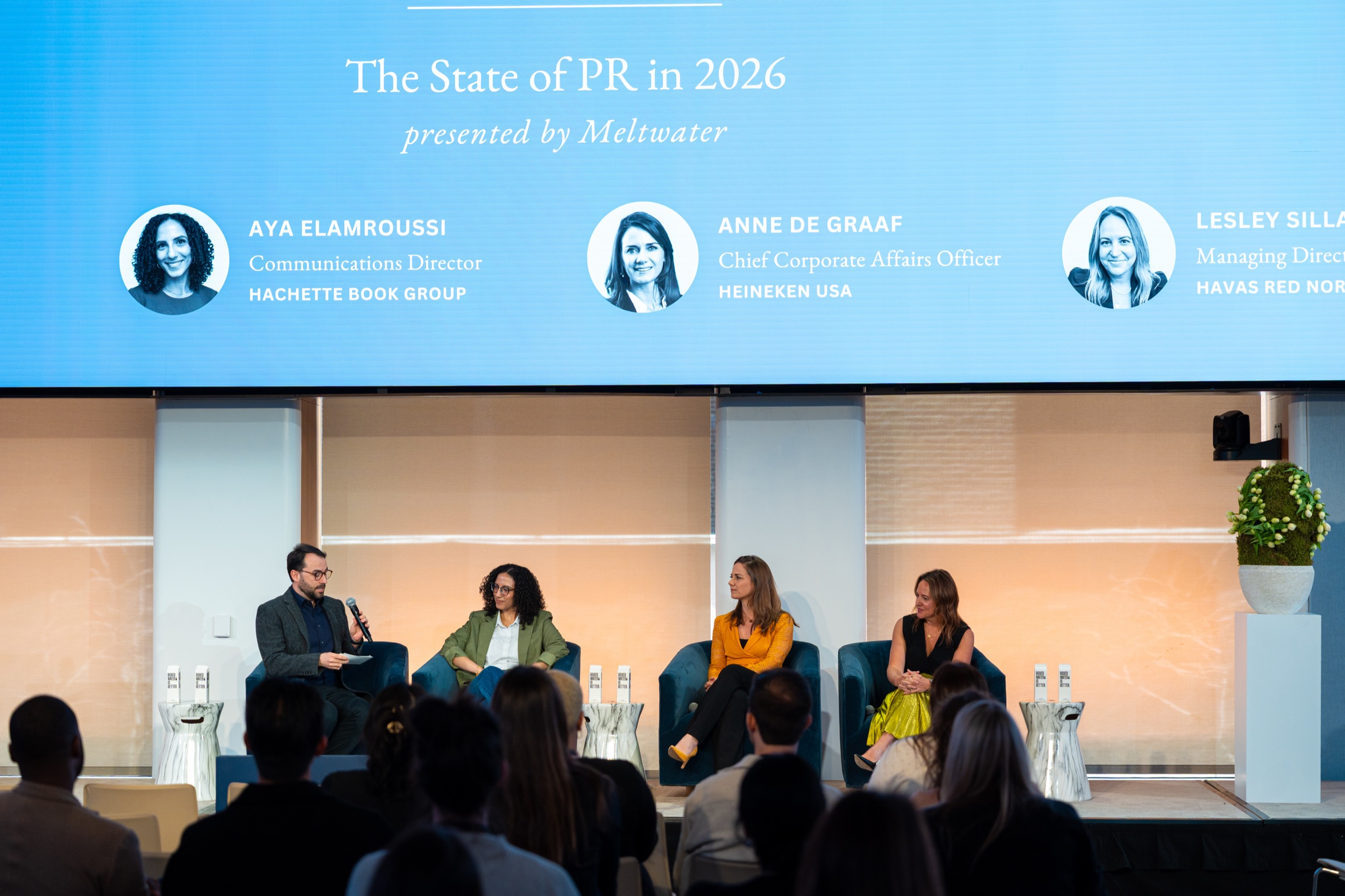
Session 6 — Presented by Meltwater
The State of PR in 2026
Panelists: Aya Elamroussi, Communications Director, Hachette Book Group; Anne de Graaf, Chief Corporate Affairs Officer, Heineken USA; Lesley Sillaman, Managing Director, Havas Red North America. Moderated by TJ Kiely, Director, Brand and Partner Marketing, Meltwater.
This session took stock of how PR teams are operating amid constant change and the practical integration of AI into daily work.
"In our State of PR 2026 report, we learned that 90% of PR and comms professionals are using AI, but only 13% have effectively integrated it into their workflows. So there's still a lot of room for adoption when it comes to AI within our industry." — TJ Kiely
Anne de Graaf captured the recalibration mindset: "There's no more one size fits all; and there's no longer a strategy that holds longer than a season, a quarter, or even a news cycle. The question I keep coming back to is: how do we scale while still being relevant, authentic, and culturally resonant? That balance isn't a strategy you set once. It's something you're recalibrating again and again."
Aya Elamroussi anchored the data conversation in mission: "We've been using data to help us gain insight into how we can push our Raising Readers campaign forward. We are tracking who's talking about it online, which organizations are picking up our messaging and sharing it, and the organizations we should consider for partnership. We want to see where people are most engaged and what drives the most engagement."
Lesley Sillaman reframed the relationship between teams and AI: "AI absolutely helps make us more efficient for tasks like research, first drafts and testing of concepts. We also beginning to partner with it for creative ideation, making sure our teams own the nuance, judgement and final decision making. We view AI more as a coworker and team member than tool. I'm personally trying to tweak my language from saying I've used it to I'm working with it to help make the mental shift as well."
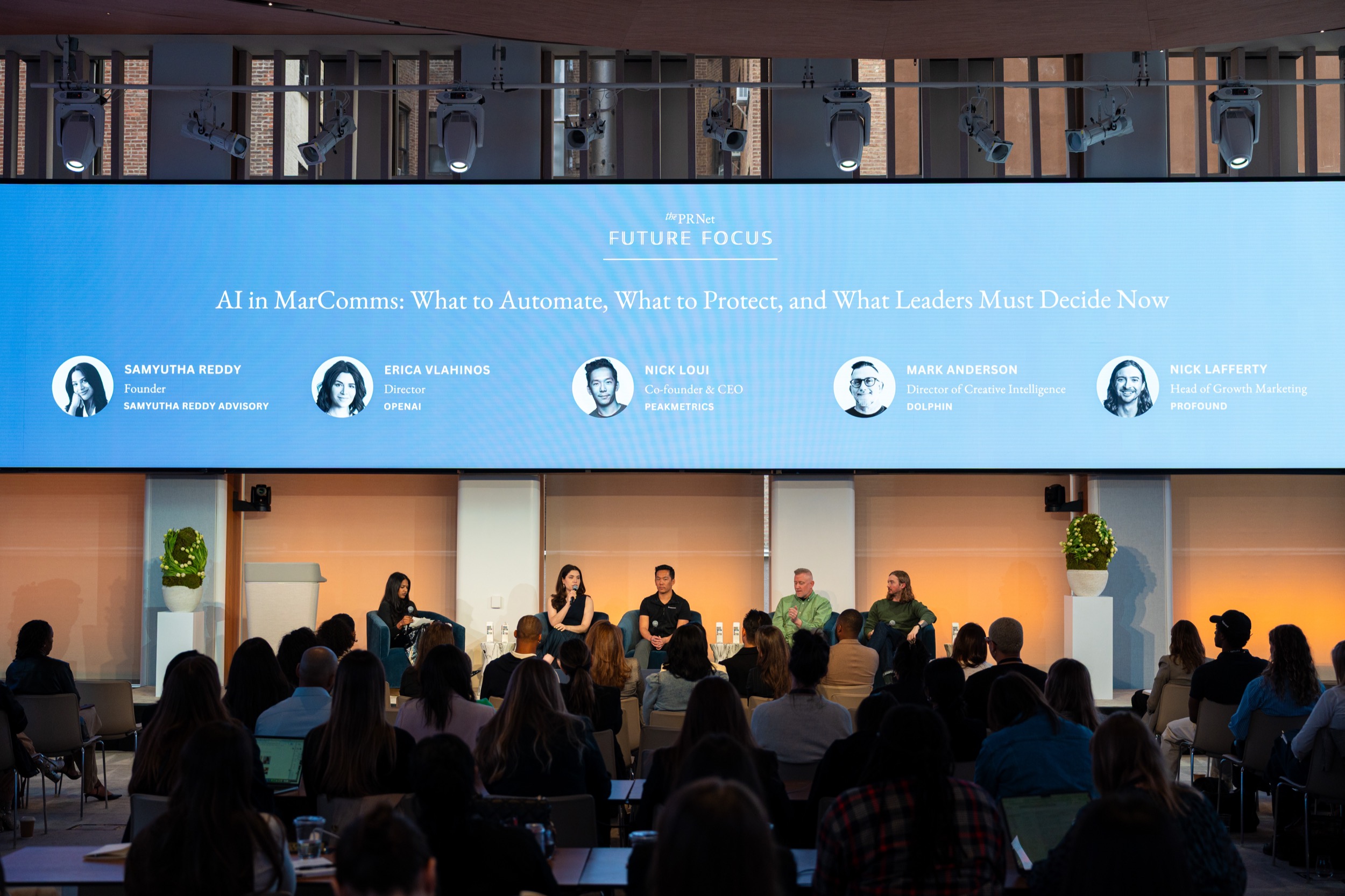
Session 7
AI in MarComms: What to Automate, What to Protect, and What Leaders Must Decide Now
Panelists: Erica Vlahinos Anstine, Director, OpenAI; Nick Loui, Co-founder & CEO, PeakMetrics; Mark Anderson, Director of Creative Intelligence, Dolphin; Nick Lafferty, Head of Growth Marketing, Profound. Moderated by Samyutha Reddy, Principal, Samyutha Reddy Advisory.
This panel unpacked how AI has moved from experiment to infrastructure, and what that shift means for content, search, and the shape of work itself.
"AI adoption isn't just on employees to figure out. The organizations and systems that support them have to show up too. Do you have the enterprise licenses? Are you investing in training and adoption the same way you'd invest in any other software you expect people to use every day? For those of you in this room who lead teams, model the behavior you want to see. That starts with you." — Samyutha Reddy
Erica Vlahinos Anstine shared the scale of adoption: "We now, as of today, have over 900 million weekly active users of ChatGPT. What that means is that one in nine living humans on Earth will use ChatGPT in the next seven days. We've been through transitions like this before, but the pace is really unprecedented."
Nick Loui pointed to the rising volume of AI generated discourse: "There's a little bit of a spicy stat that some 90% of online content will be AI generated this year. But even on top of that, from our own benchmarks, we're seeing that when brands are having a moment online, the amount of discourse that's driven and spread by bots is around 20% to 30%, and then if there is an intersection with a culture war issue... that spikes up to somewhere between 45 and 50%."
Mark Anderson named the most immediate target for automation: "Everyone talks about AI slop, but much of my career has been spent on human slop, frankly, and that human slop is the first thing to automate... you do not need a creative human copywriter to write a lot of the language that's currently out there."
Nick Lafferty closed by underscoring why earned media now matters more than ever: "Every company on the planet cares deeply about how AI talks about their brand... the best stat I can give you is that 95% of citations in AI search come from earned media, which means that only 5% of citations come from your own brands or your client brands' websites."
Session 8
Influence, Evolved: From Creator Partnerships to Business Impact
Panelists: Jamie Cooper, Global Vice President of Brand PR & Influence, Bacardi; Lara Highfill, Vice President, Influencer, Bobbie, a Stagwell Agency; Charlie Hart, Chief Growth Officer, Trend; Molly Soloff, Head of Creator, Influencer, and Celebrity, Orchestra. Moderated by Coltrane Curtis, Founder and Managing Partner, Team Epiphany.
This panel traced the move from transactional creator partnerships to long term ecosystem building, where shared values and audience insight matter more than follower counts.
"I really believe that if you have access to the power that can build celebrity, that you can actually turn a brand into a celebrity. And so for me, influence is the sharpest tool in the toolbox." — Coltrane Curtis
Jamie Cooper made the case for niche over reach: "Sometimes it's not the creator with the biggest follower count. It can be a really niche audience, but if they love your brand and genuinely believe in it, they will be the best storyteller you have."
Lara Highfill grounded the discussion in audience behavior: "We found that over 50% of Gen Z see influencers as friends. So we know that friendship piece, that relationship piece, that human nature is so crucial to all of the work." Charlie Hart reframed creators as insight partners: "Creators often know their audiences better than brands do. They've built years of data and daily feedback loops, but too many brands never unlock that insight because they just don't speak to them enough."
Molly Soloff closed on what creators truly value: "What creators really care about outside of money... is power over the brands, issues, causes, sectors that they really care about, access to places, spaces, products that they wouldn't otherwise have and a legitimacy through recognition as a cultural authority."
Session 9
How MarComms Leaders Are Deciding & Prioritizing Right Now
Panelists: Jordan Saxemard, Chief Marketing & Digital Officer, Sol de Janeiro; Tamika Young, Chief Marketing & Communications Officer, Hinge; Carina Ertl, Chief Marketing Officer, Tourneau | Bucherer USA; Kelly Mason, Vice President of Communications, Americas, Volvo Cars. Moderated by Michael Houston, President, US, WPP.
The day closed with a candid look at how today's top marketing leaders are making sharper choices about where to invest, what to pause, and what to ignore.
"We've gotten very good at identifying everything that matters. Success now is deciding what matters most and having the bravery and discipline to ignore the rest. That's how you grow without diluting the brand, and move fast without becoming reactive." — Michael Houston
Jordan Saxemard anchored modern brand building in emotional resonance: "Human beings are made of feelings. Don't forget that in storytelling, no matter how short or how long, you tend to find that content that has that strong, authentic emotional draw will often prove to be what audiences are most engaged with."
Tamika Young pushed leaders to move diversity upstream: "What's been under leveraged is the power of diversity in campaigns. It's relatively easy for brands to have diverse representation in their campaigns, and that should be table stakes for us these days as marketers. But what's even more impactful is having diverse voices and perspectives farther up the funnel, in how you're thinking about your work. When you bring people with different lived experiences into every stage of building a product or campaign, you create something people can truly see themselves in. That is what drives deeper and more meaningful engagement in the end."
Carina Ertl reflected on community as a luxury imperative: "We are focused on creating memorable experiences and building community. Luxury consumers are drawn to moments of connection and spaces that ignite conversation and discovery, where they can share their passion for luxury timepieces and craftsmanship. This reflects the current state of luxury retail today. As the industry continues to evolve, we will remain committed to delivering immersive, in person experiences that meet our customers where they are."
Kelly Mason closed with a question every team can use as a filter: "We're never going to outspend our premium competitors, so we have to do things that are truly differentiated. And I think that's what we always want to ask ourselves. Is this something that only Volvo Cars could do?"
The 2026 Future Focus Conference offered a day of thought leadership, bold ideas, and meaningful connection, cementing its role as an essential gathering for marketers, communicators, and creatives shaping what's next.
Notable Brands & Agencies in Attendance
Autumn Communications, Berlin Rosen, BMF, Bobbie, Brandman Agency, Care of Chan, Citizen Relations, Day One Agency, Derris, DS Simon, Edelman, FINN Partners, H&S Communications, Havas Red, Hunt & Gather, HUNTER, Interluxe Group, J/PR, Krupp Group, LaForce, M Booth, Nike Communications, No. 29 Communications, Novità Communications, Orchestra, Perowne International, Polar Black Events, Quinn, Small Girls PR, Team Epiphany, The Brand Guild, WPP, Bacardi, Bucherer USA, CHANEL, Convene Hospitality, Hachette, Hallmark, Hasbro, Heineken USA, Hinge, Microsoft, MoMA, National Portrait Gallery, NYC Tourism + Conventions, Reddit, SERHANT., Smithsonian National Portrait Gallery, Sol de Janeiro, Solidcore, Splits59, Substack, Talbots, The New York Times Wirecutter, The Ritz-Carlton Yacht Collection, TikTok, Volvo Cars, Yelp.
Convene, Meltwater, Alphametricx, Armanino, Citizen Relations, Edelman, Primal NY, and FDK Florals.