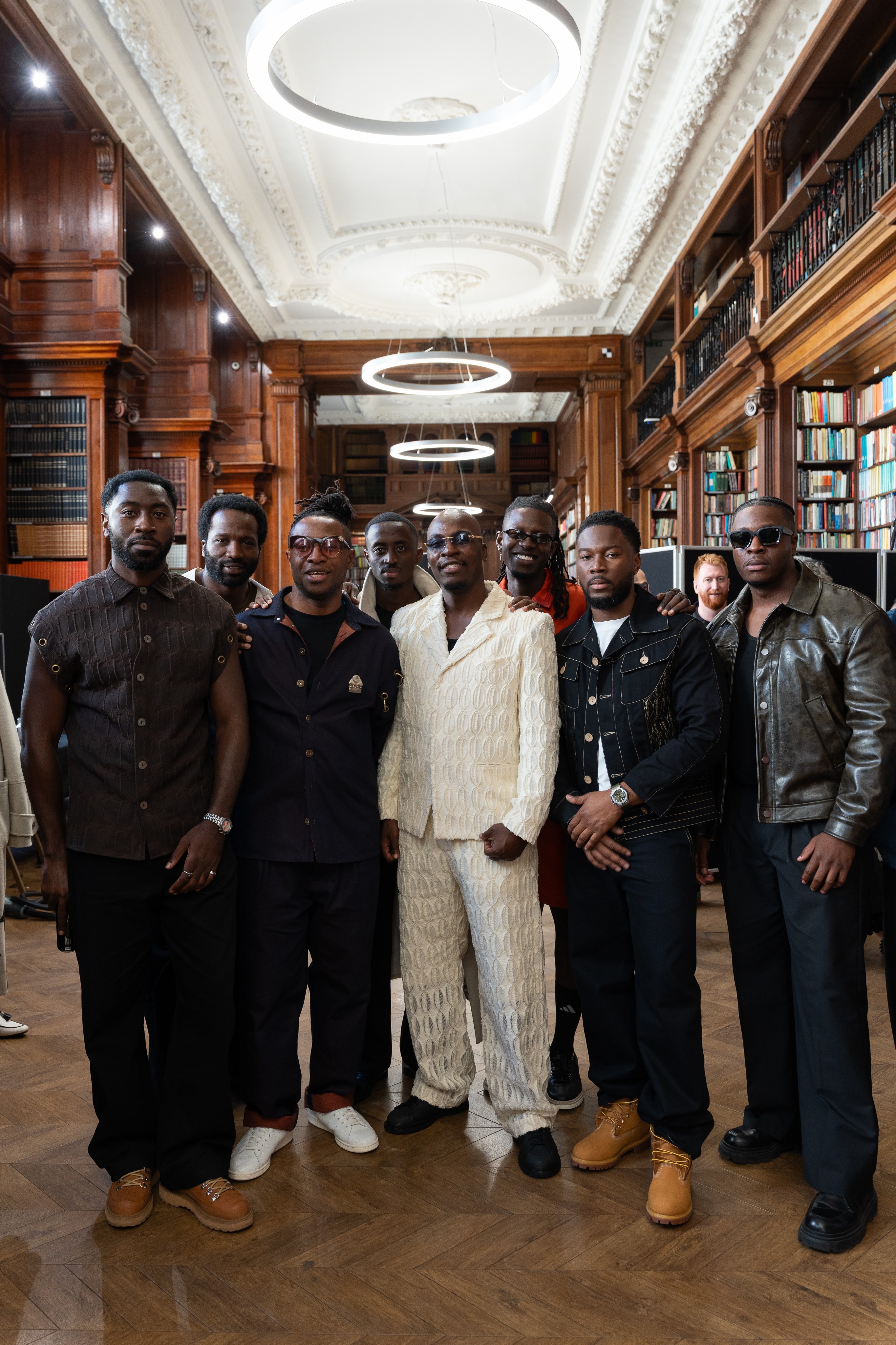
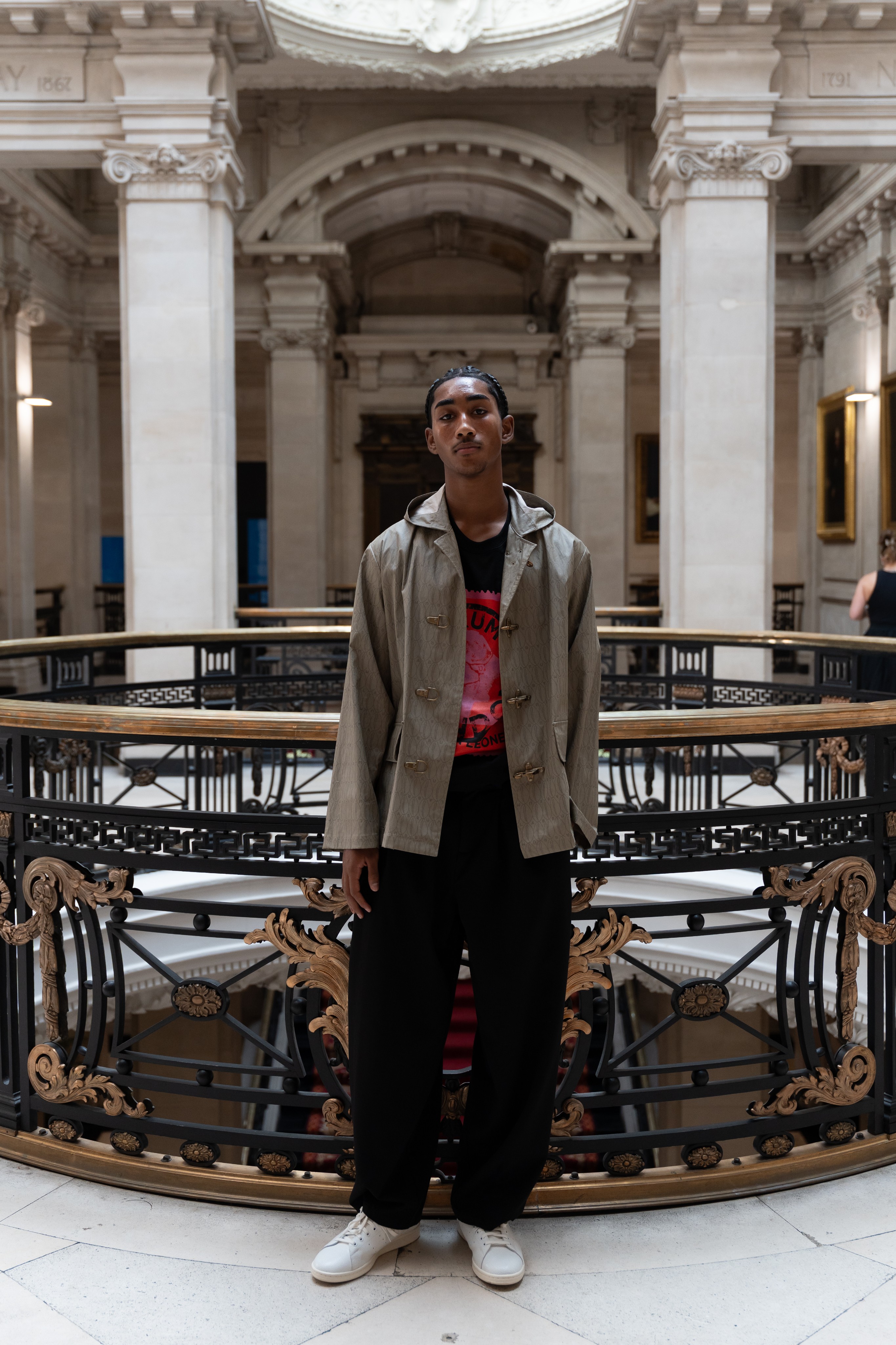
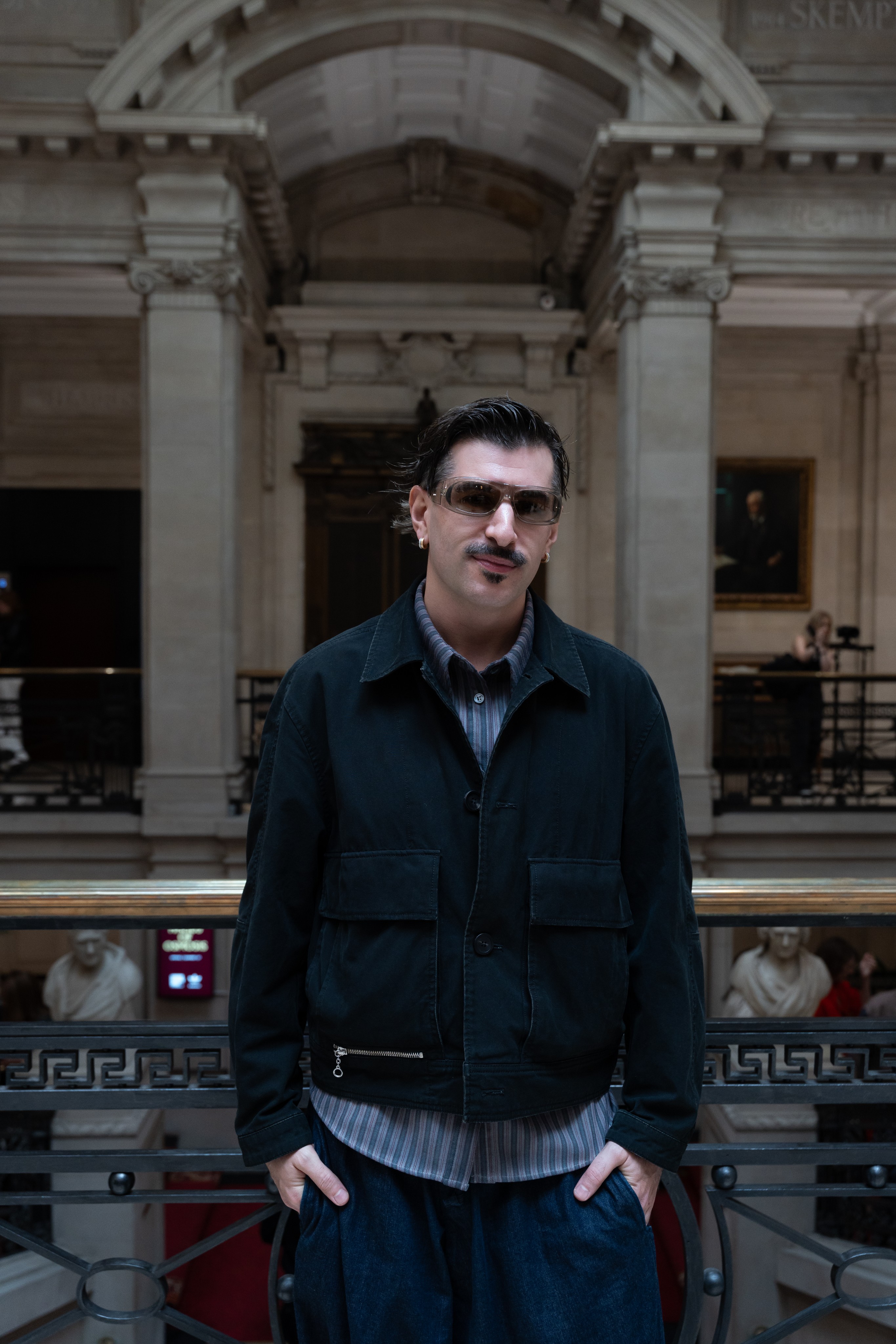
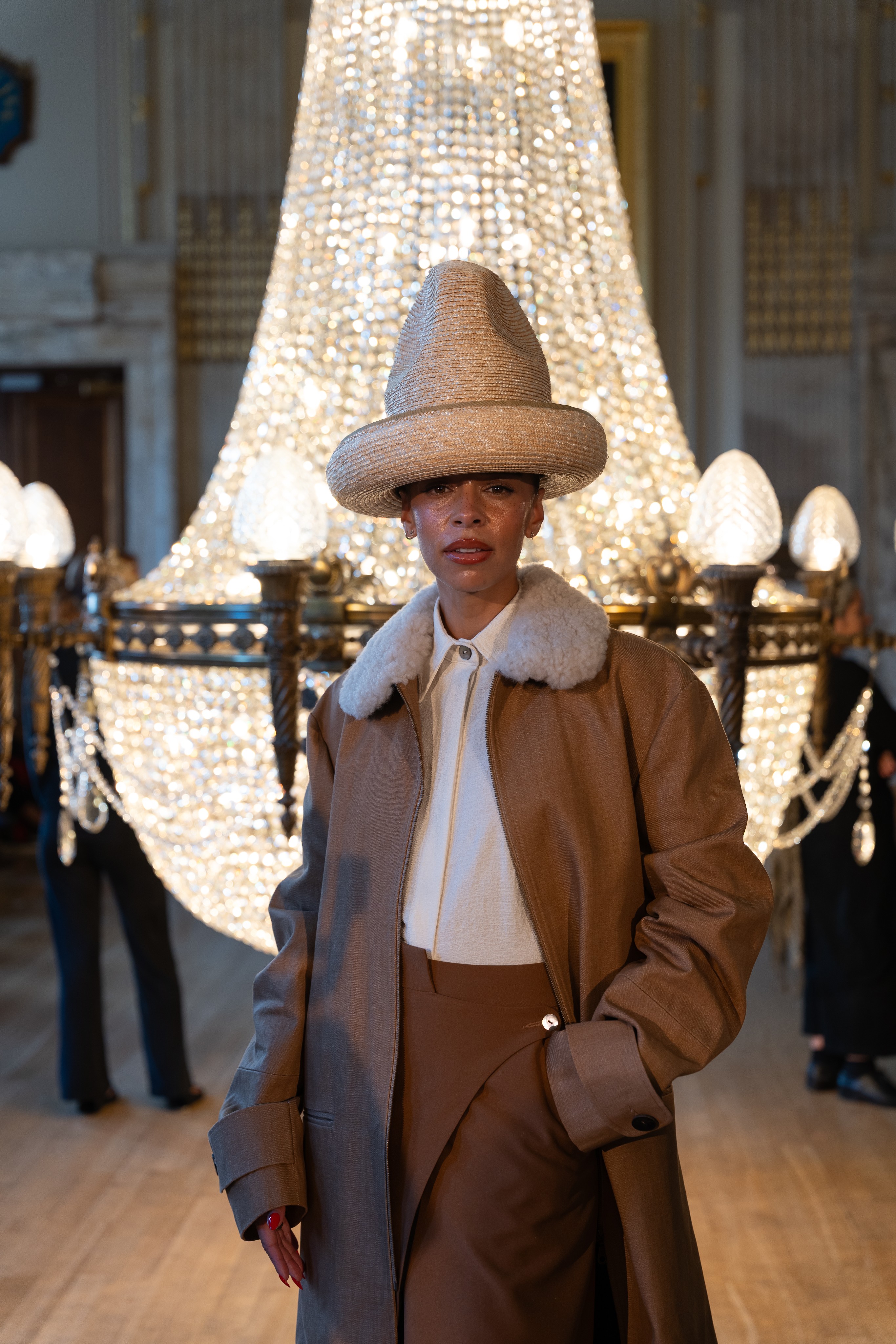
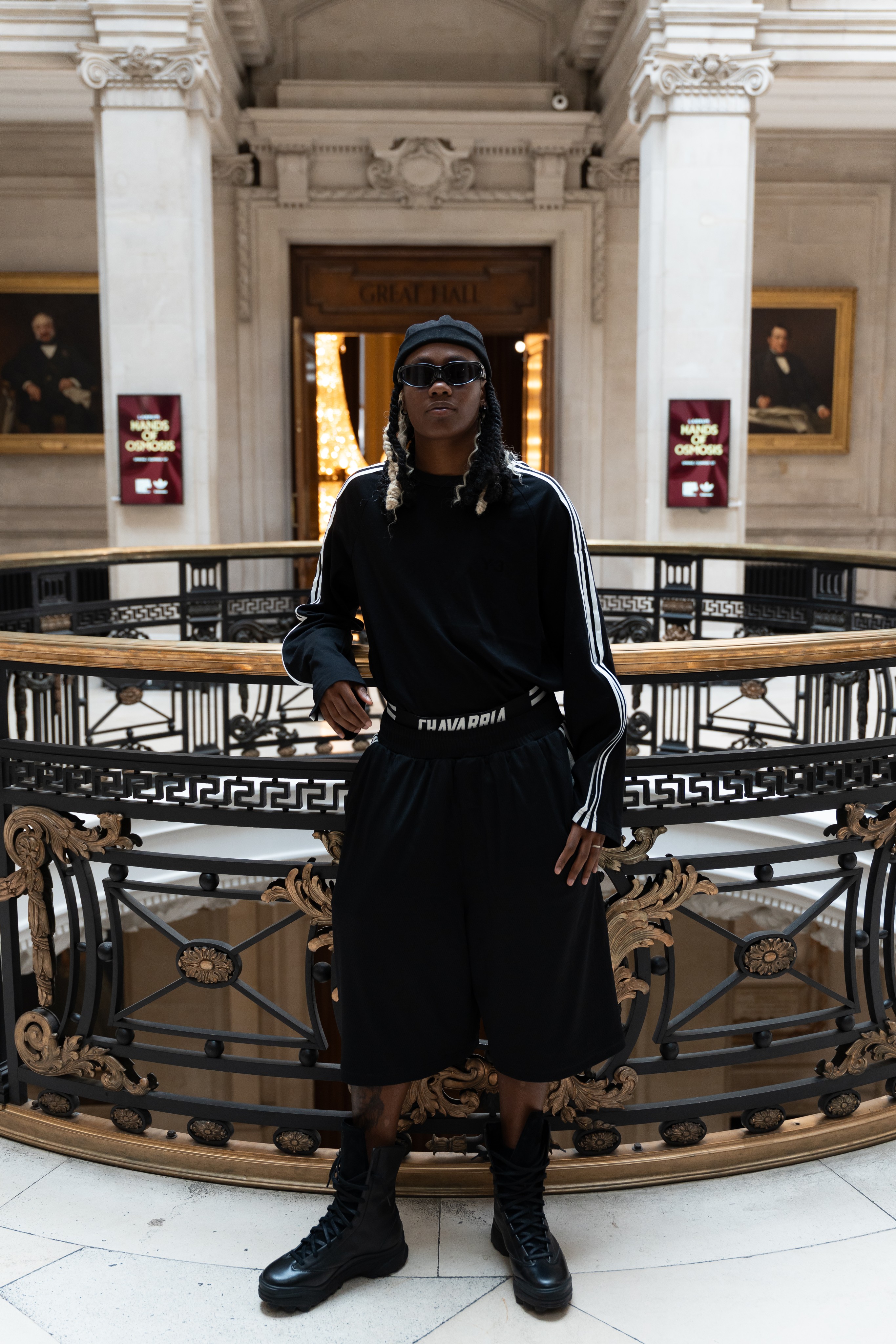
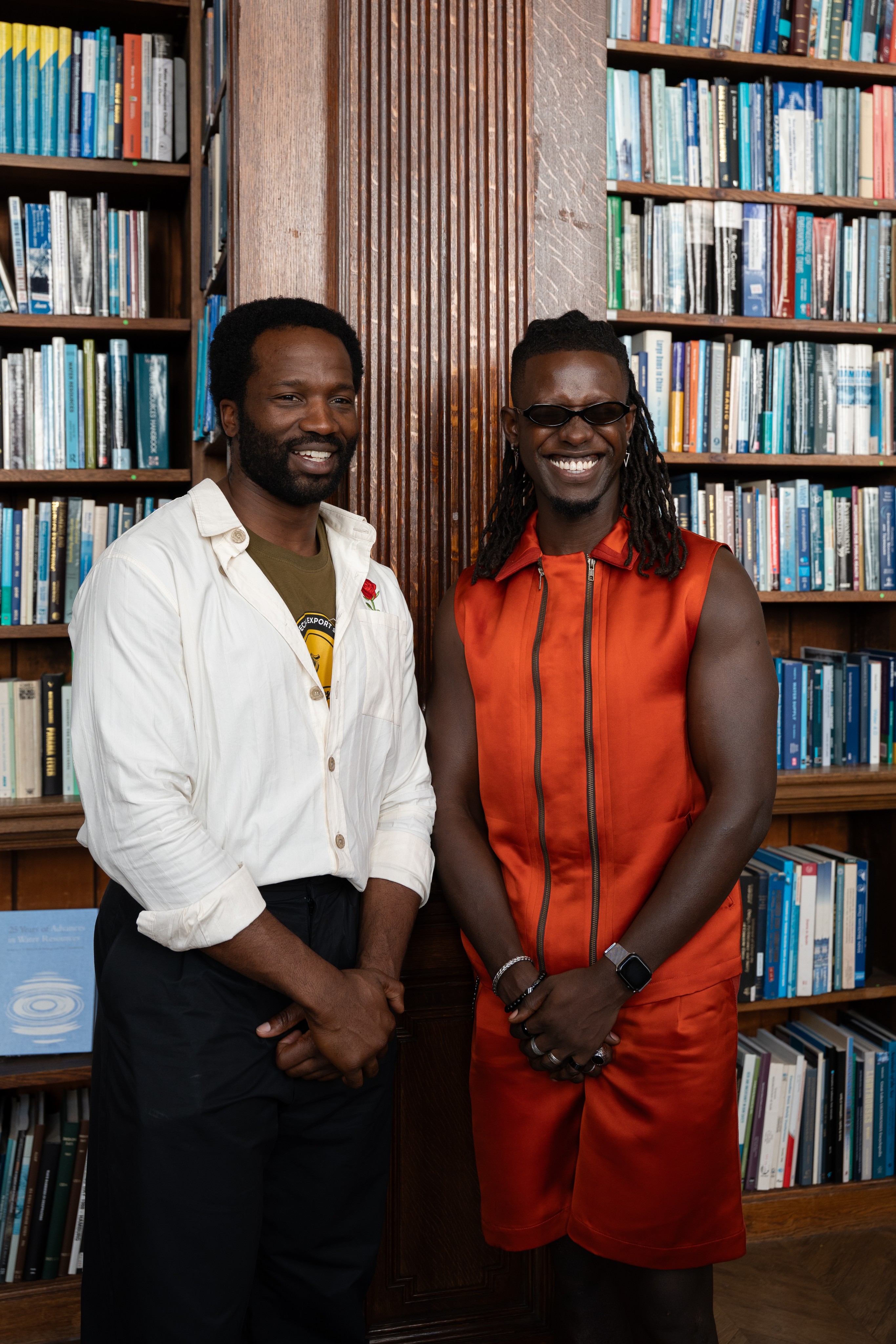
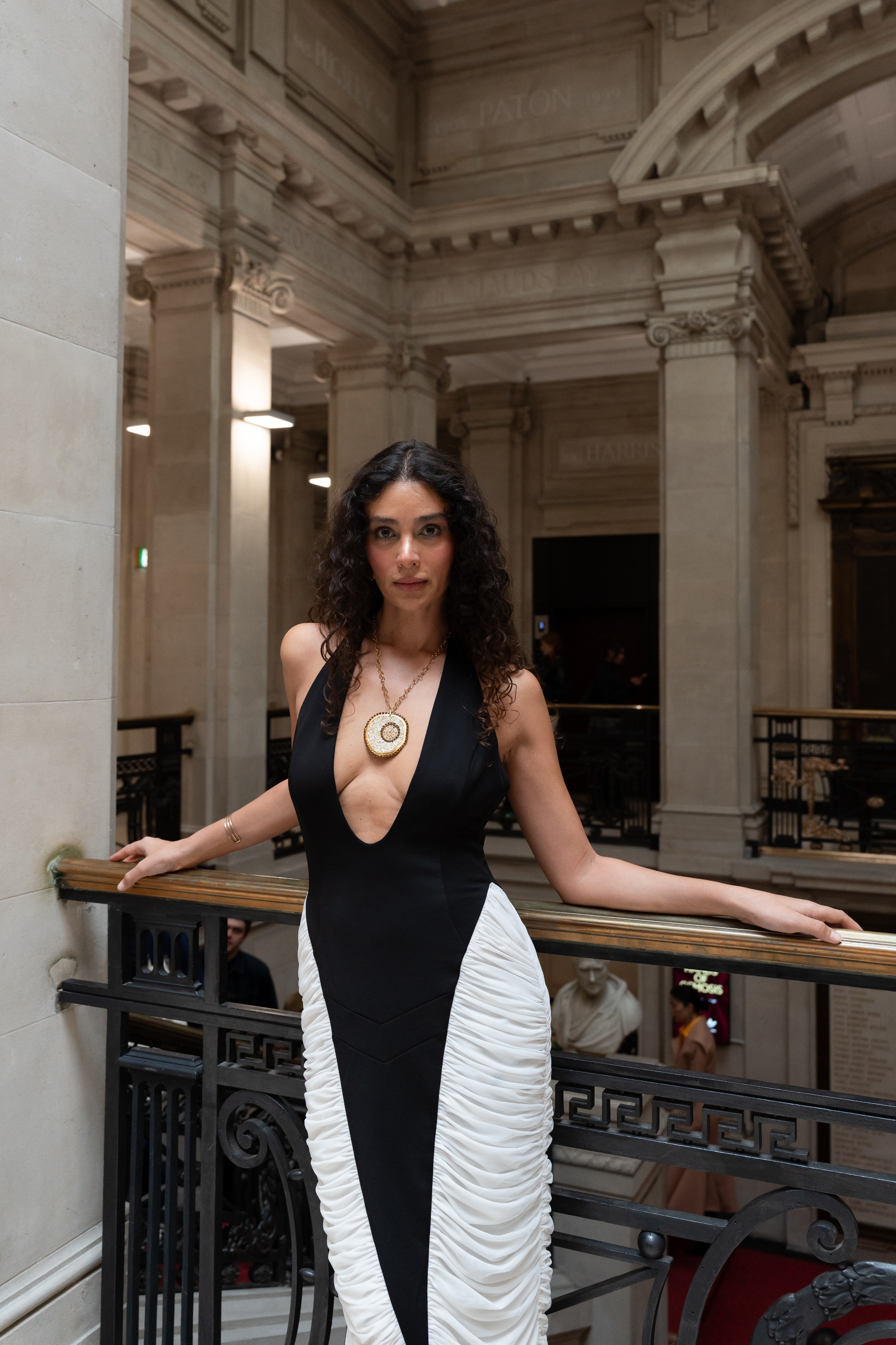
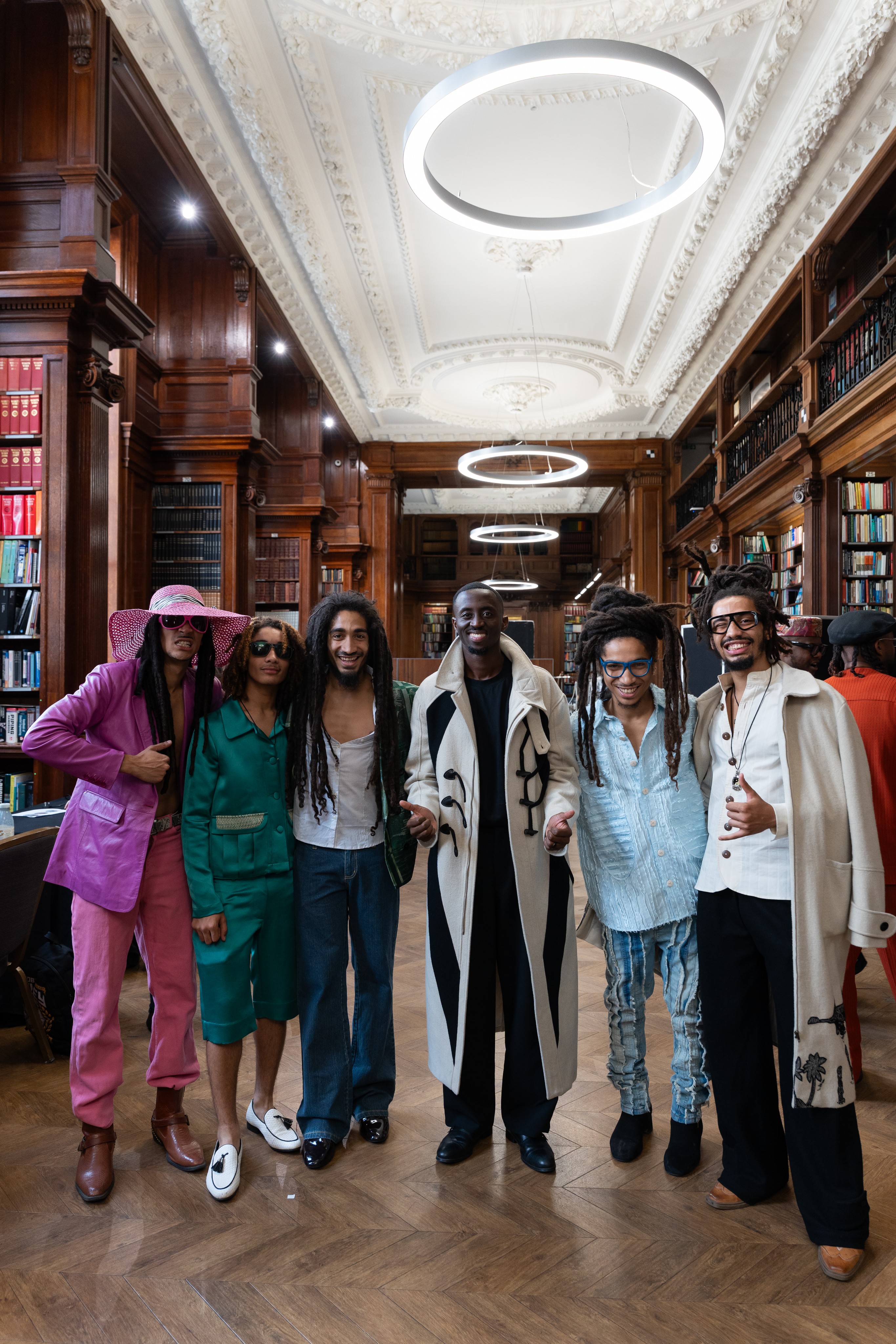
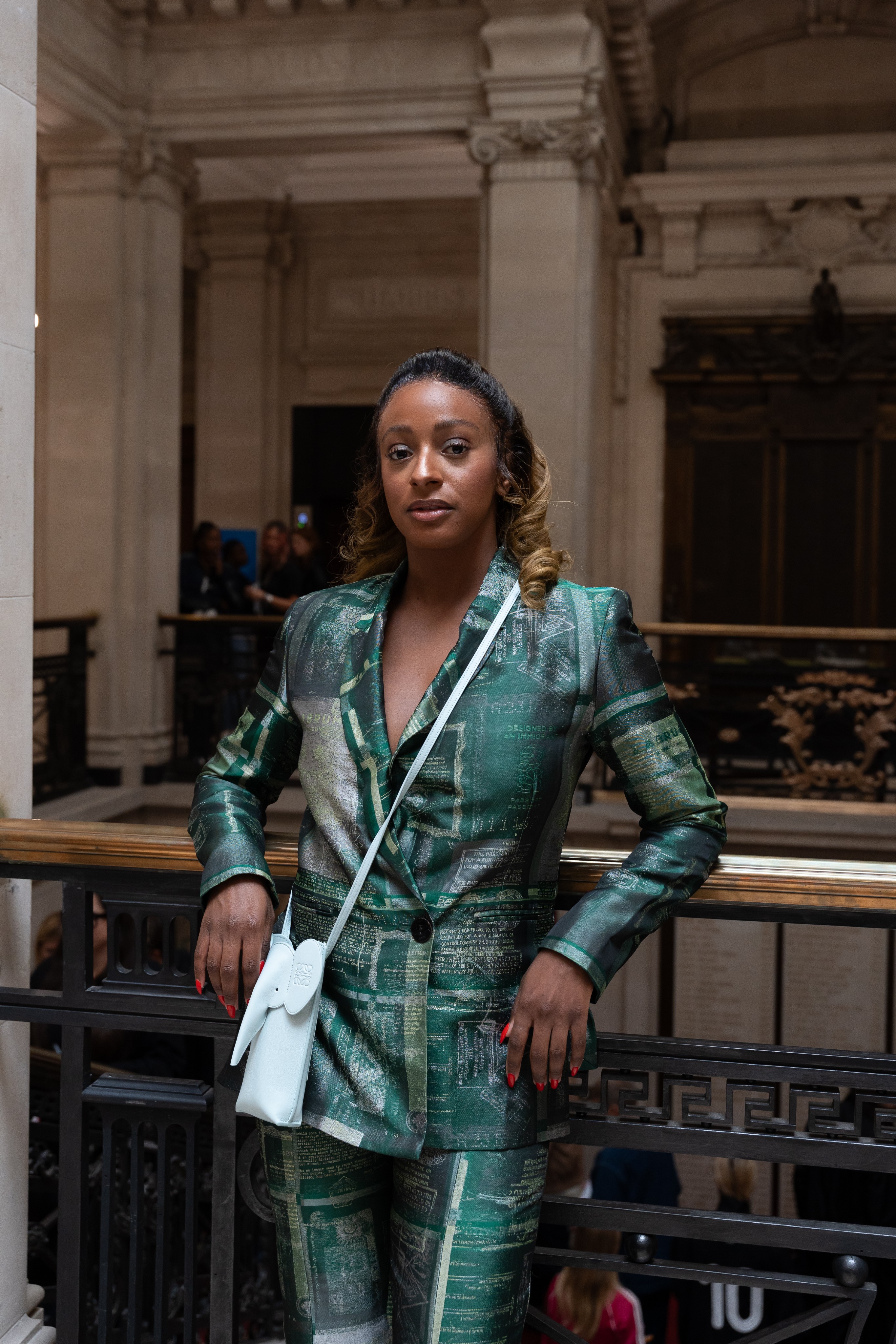
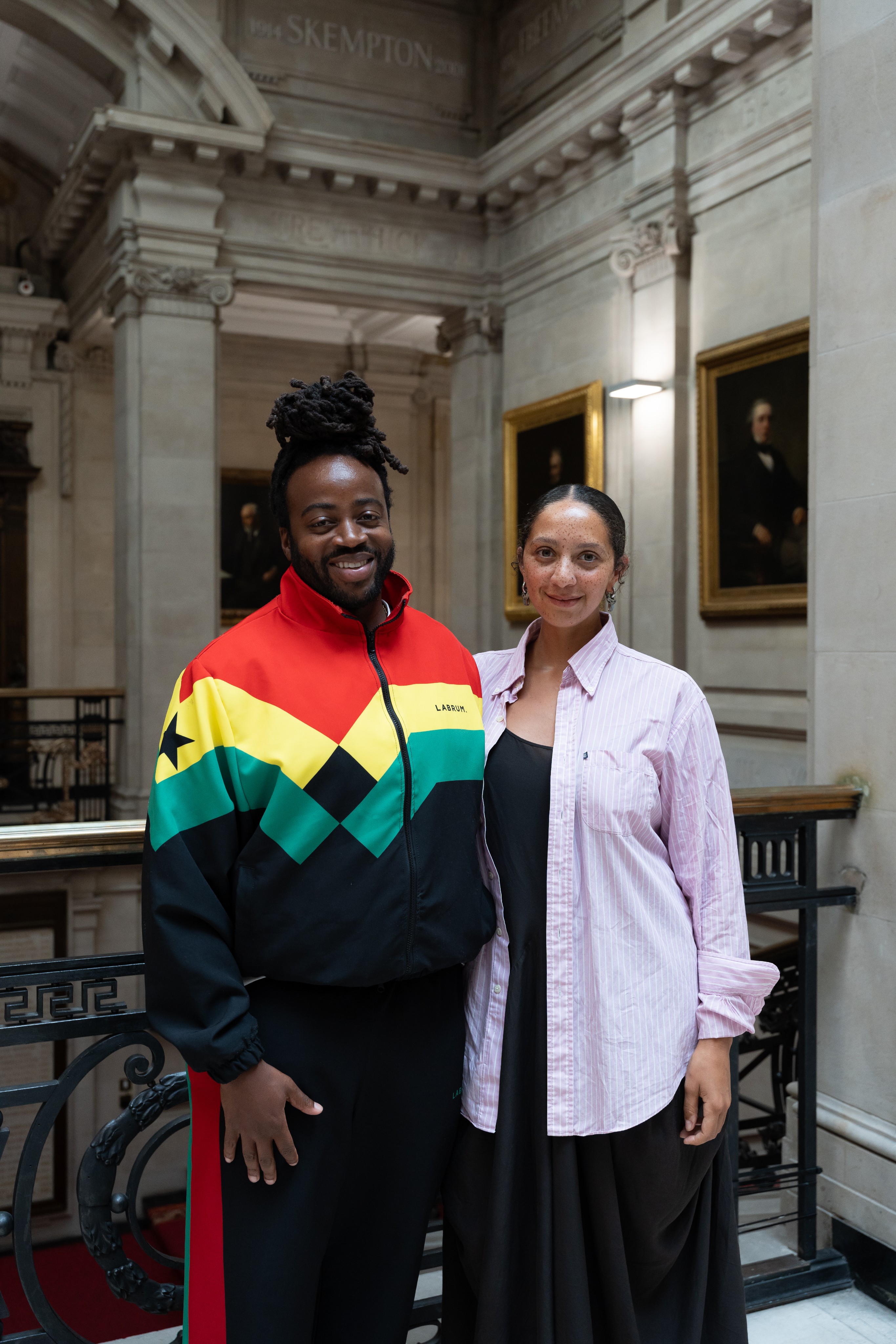
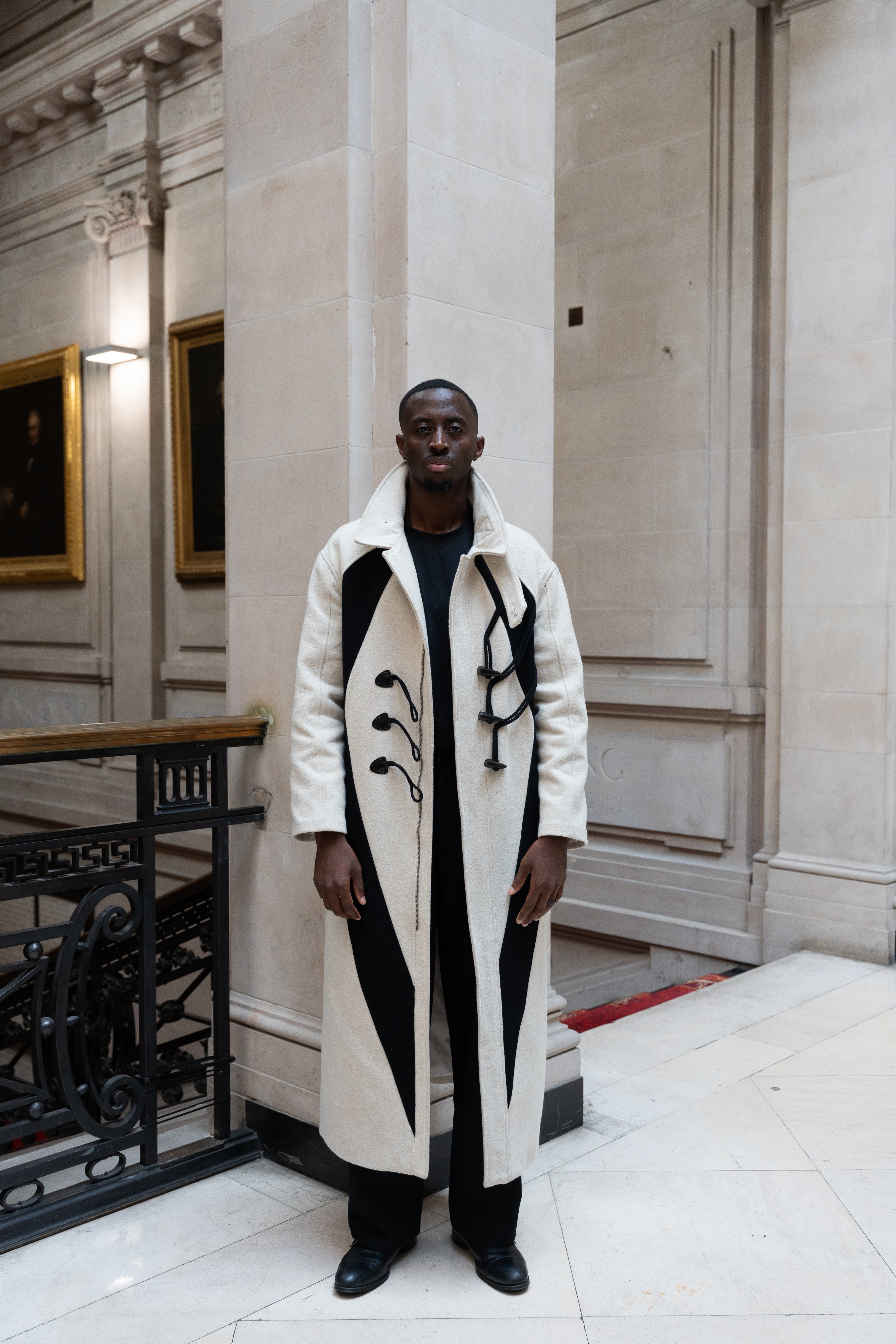
The final chapter of LABRUM’s Osmosis trilogy, Hands of Osmosis explored the movement of culture across borders through craft, celebrating the hands that carried knowledge and tradition across generations. Rooted in the relationship between West Africa and Britain, the collection explored how traditional craft practices interacted, traveled, and evolved through weaving, embroidery, leatherwork, beading, and tailoring.
Inspired by the shared language of making between West Africa, India, and Britain, the collection brought together craftsmanship rooted in patience, precision, and the passing of knowledge from one pair of hands to another. Handcrafted raffia trousers made in India drew inspiration from the Mende tribe masquerade Goboi, while traditional West African weaving techniques met British millinery in a collaboration with Lucy Barlow. Sculpted leather bags referenced forms created by West African ceramicists and woodcarvers, while bold eyewear drew from the expressive styles of 1970s West African icons.
At the heart of the collection was the “Mamie Bakie” series of hand-embroidered garments, inspired by memories of founder Foday Dumbuya’s grandmother working at her market stall in Sierra Leone. The collection continued its exploration of cultural exchange through the Olokun flower motif, inspired by traditional Nigerian Adire indigo textiles, as well as collaborations with adidas and Dr. Martens. Sound for the show was created with Sampha, with Bowers & Wilkins elevating the acoustic environment.
Across Hands of Osmosis, craft became a way of tracing migration itself, bringing traditions rooted in West Africa together with British and global influences through a contemporary lens.
Image credit: LABRUM and Lee Scullion.