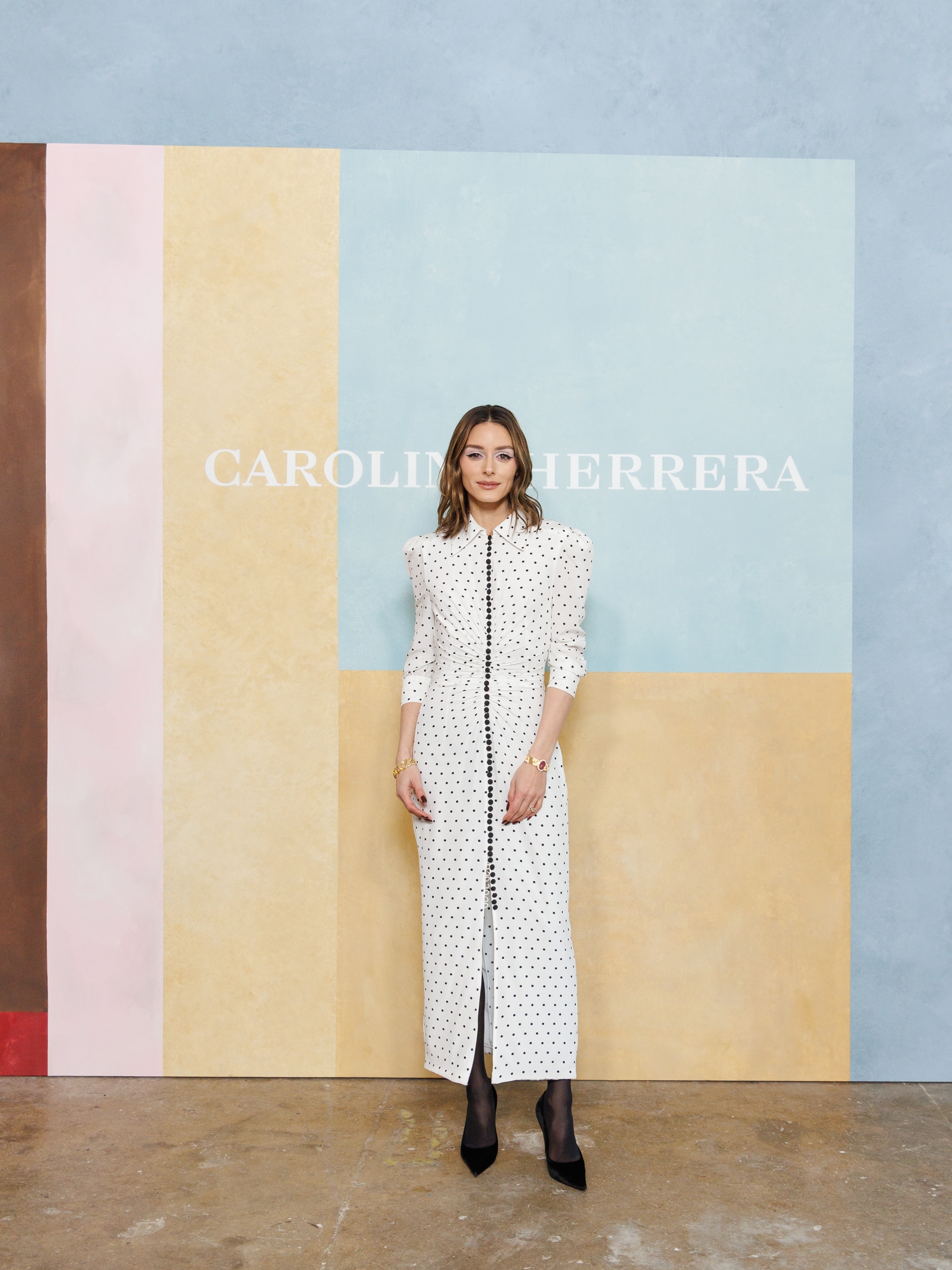
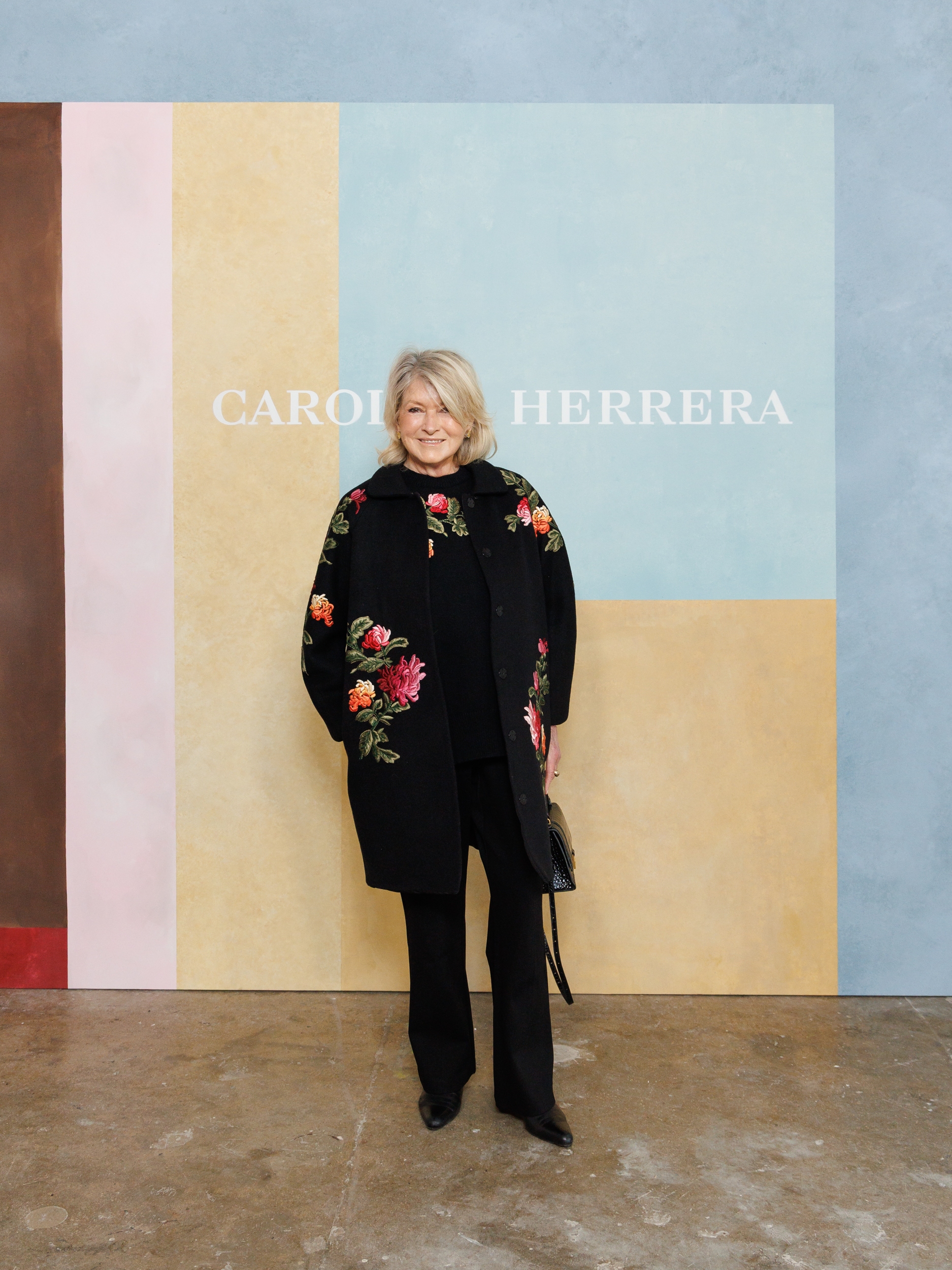
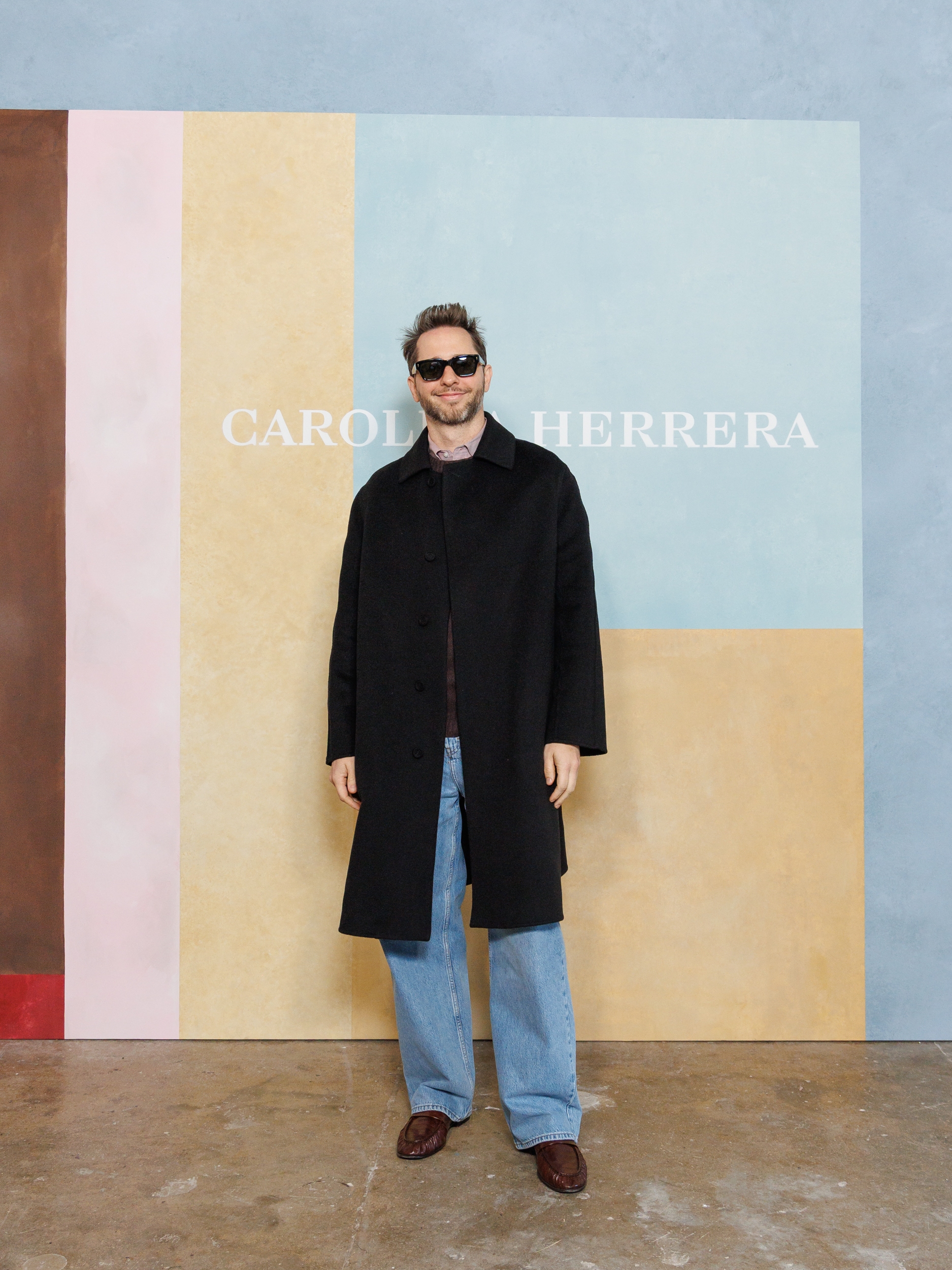
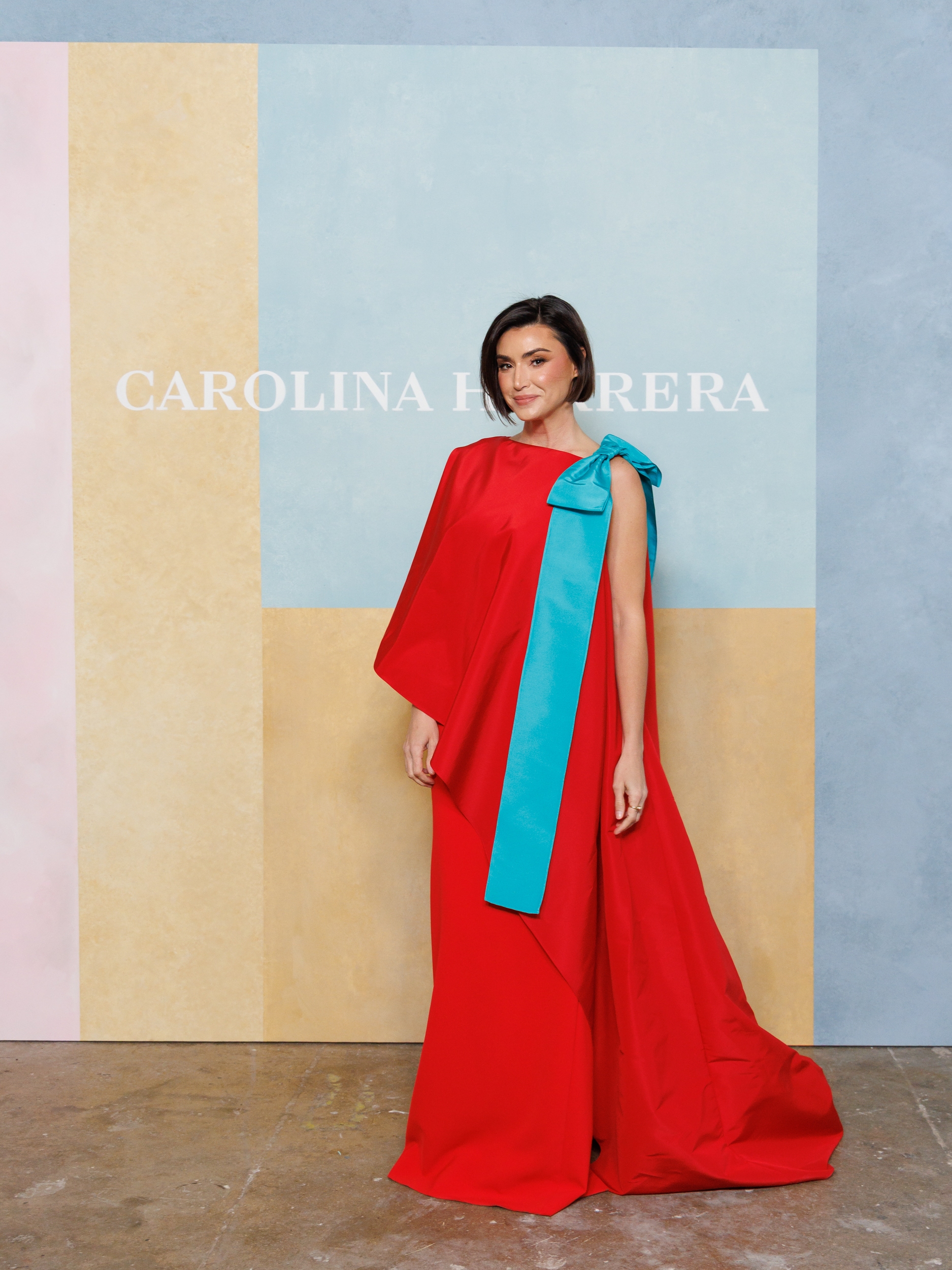
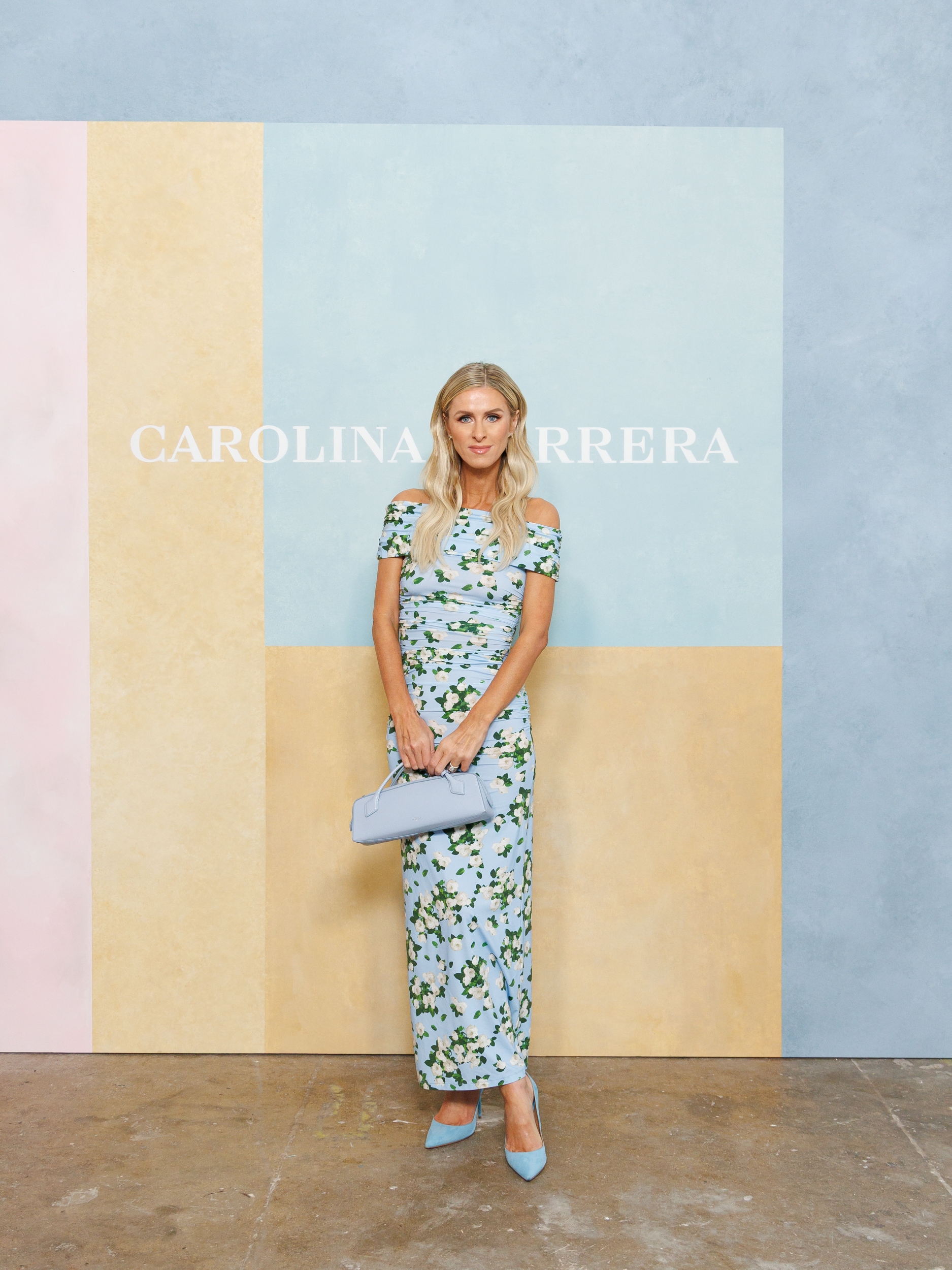
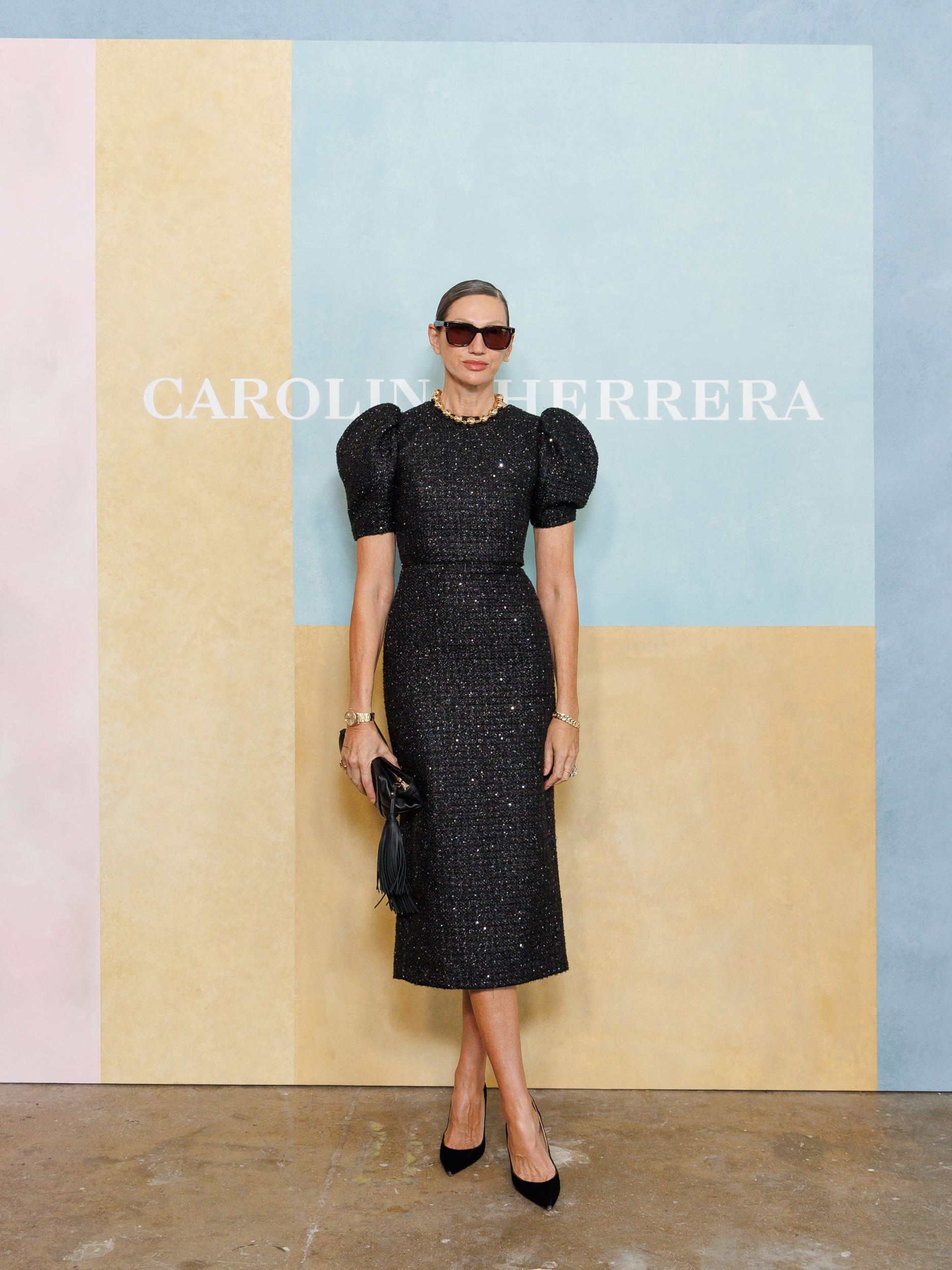
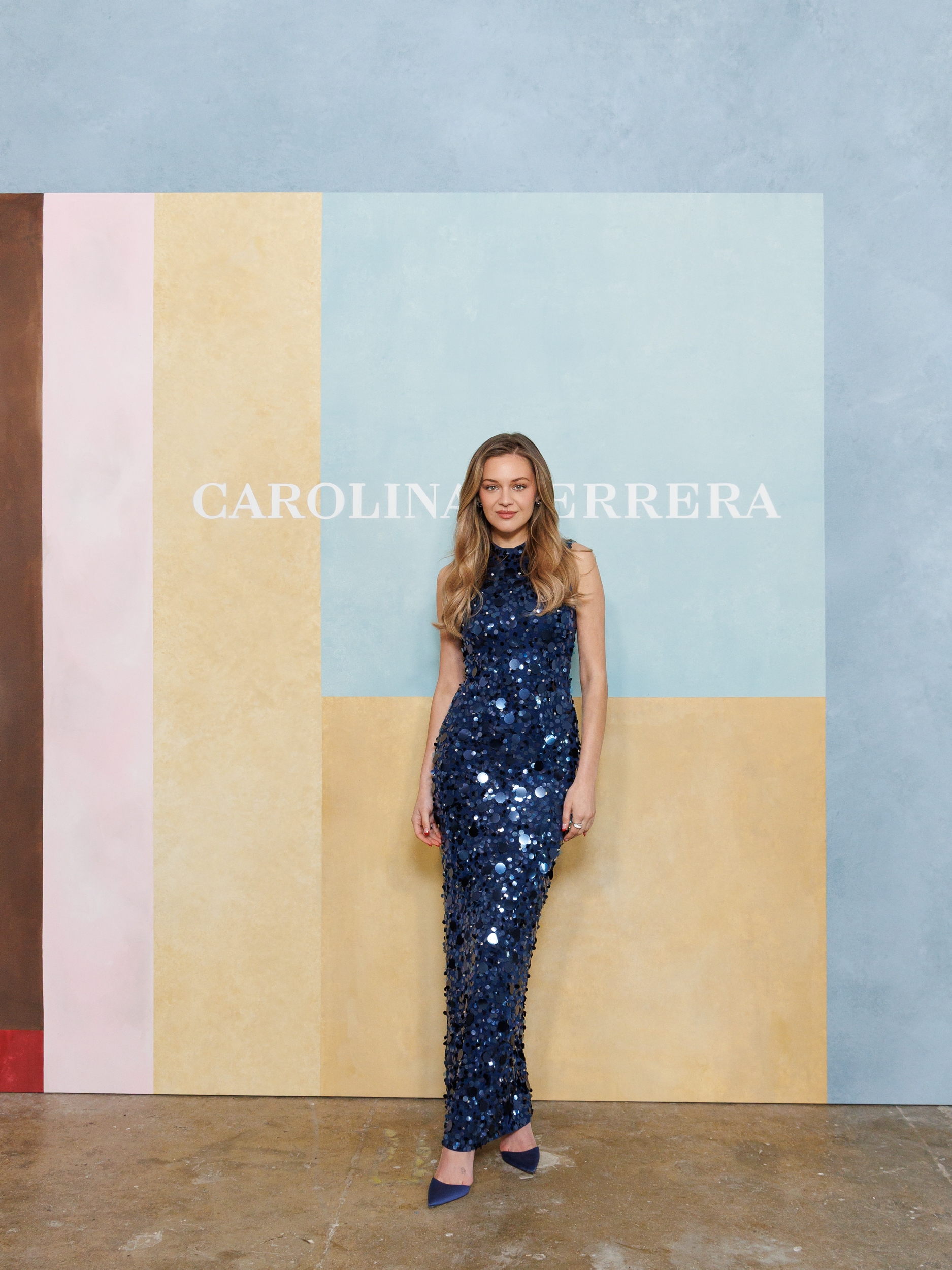
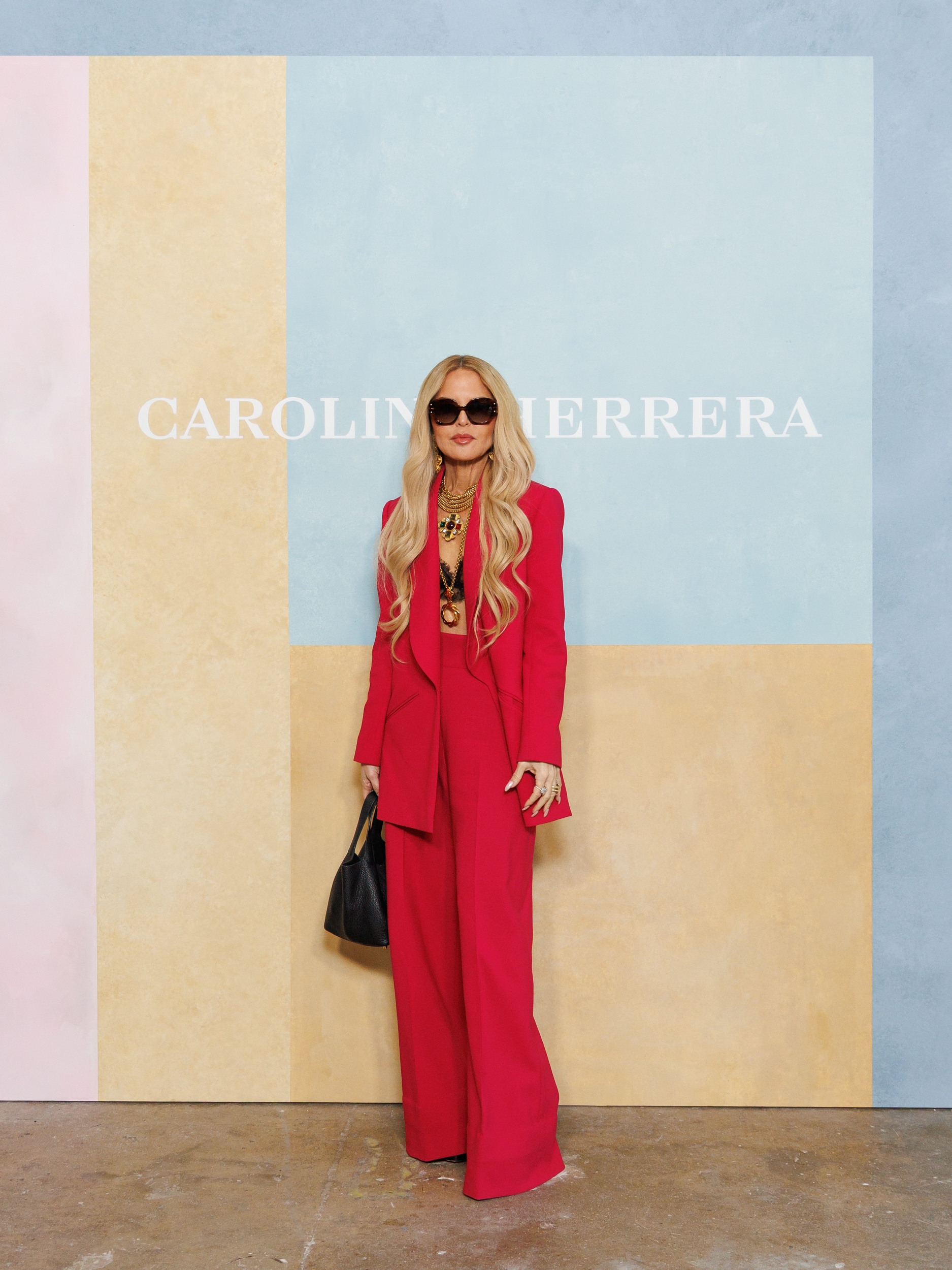
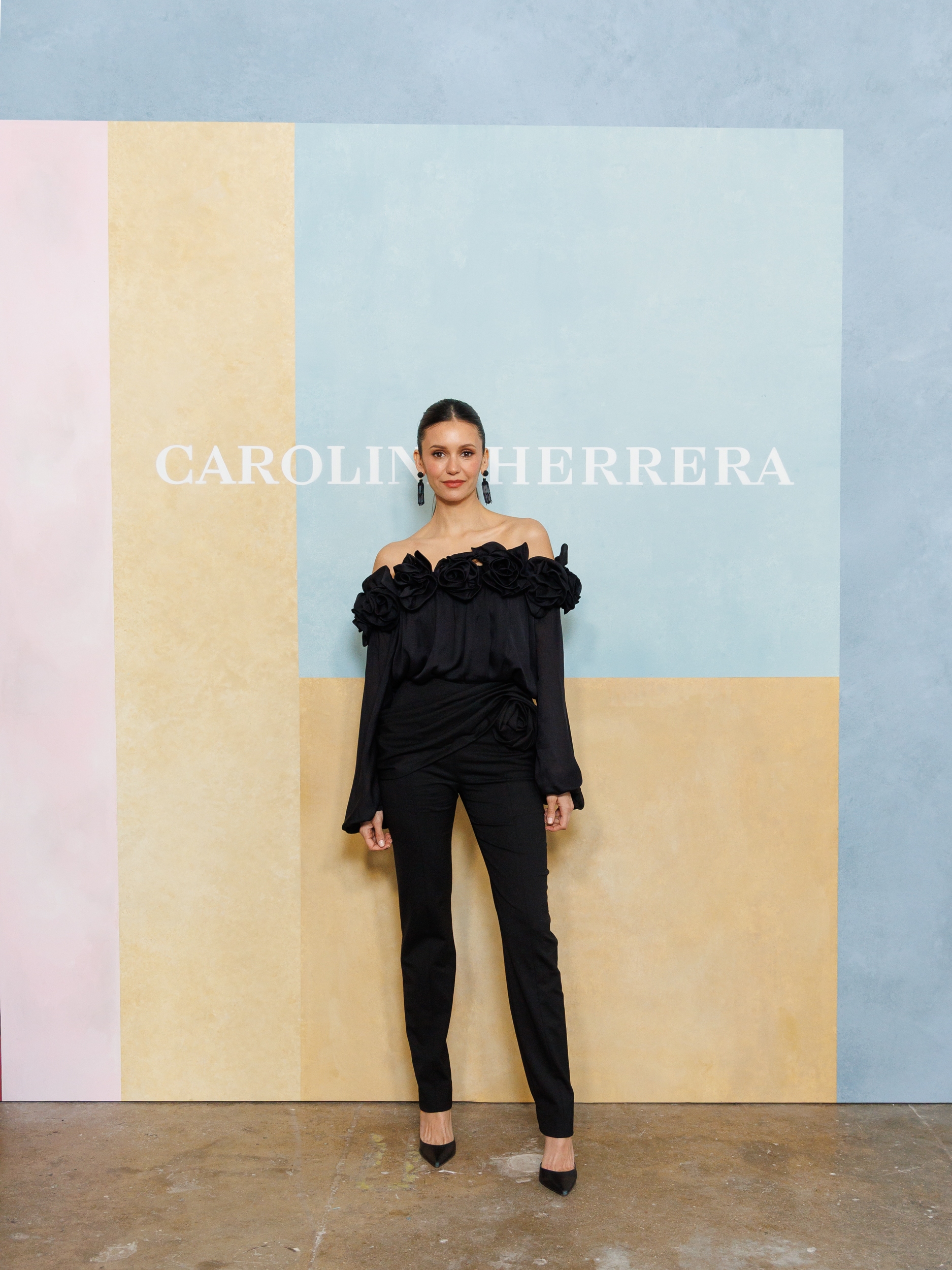
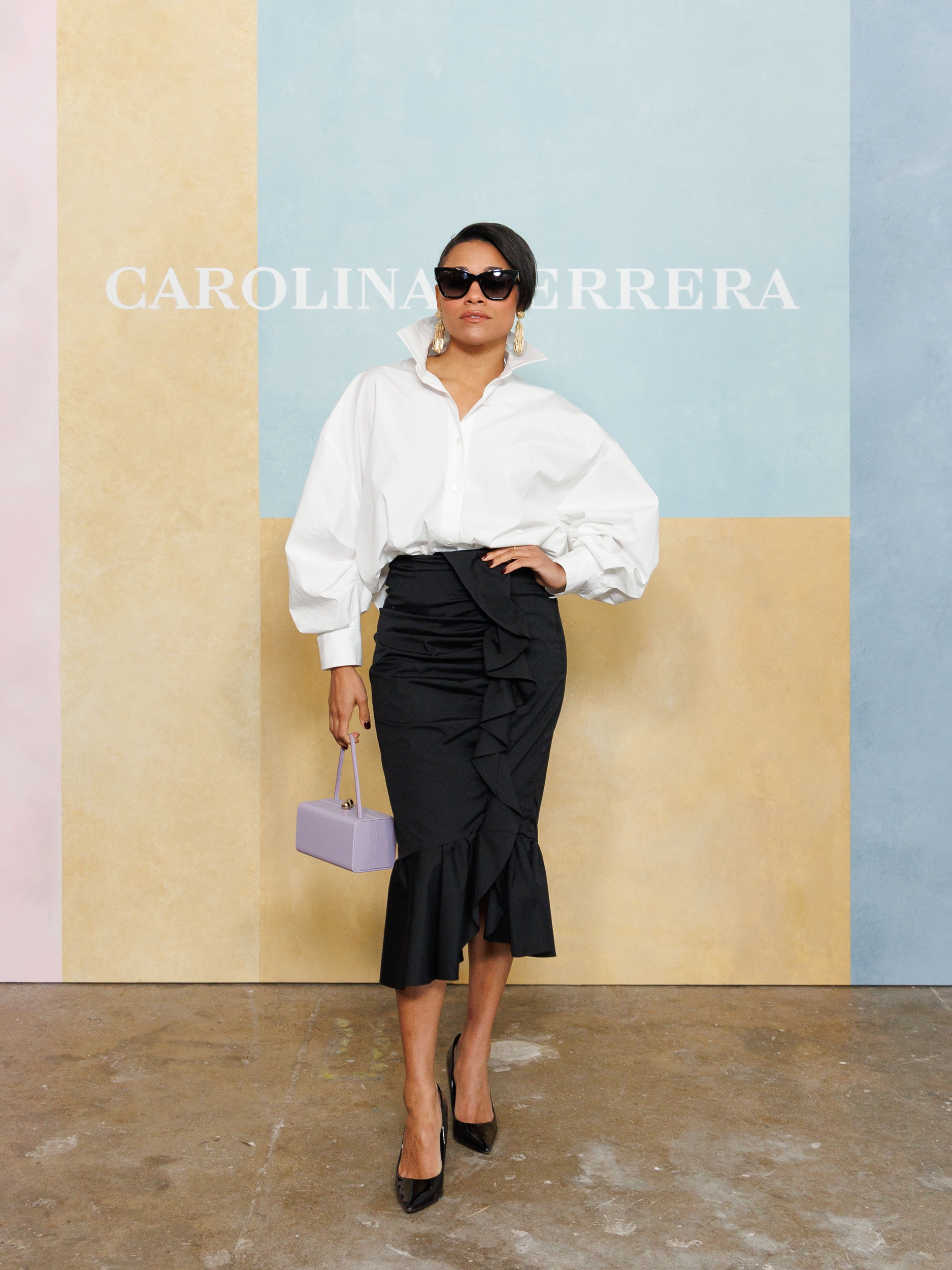
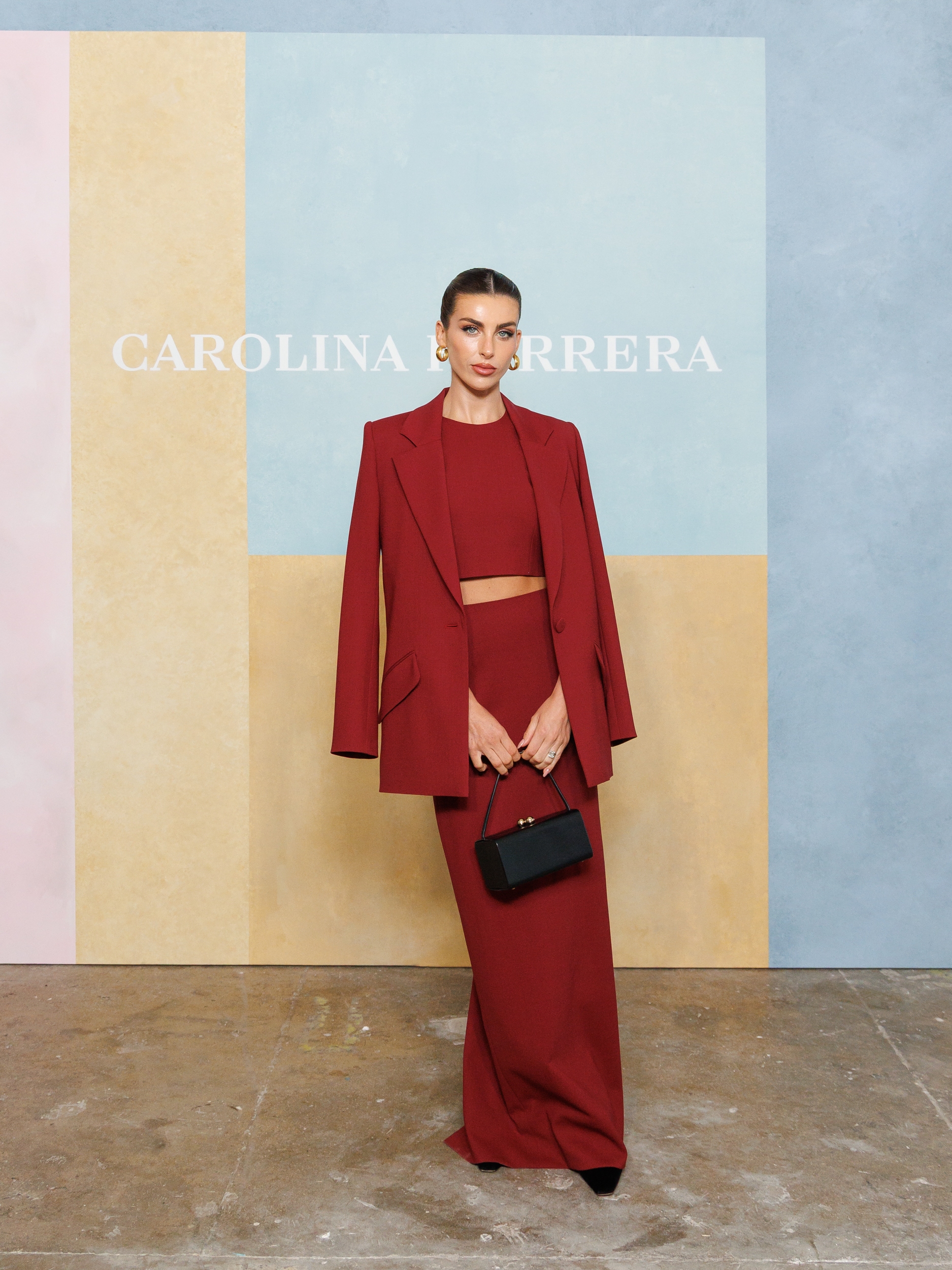
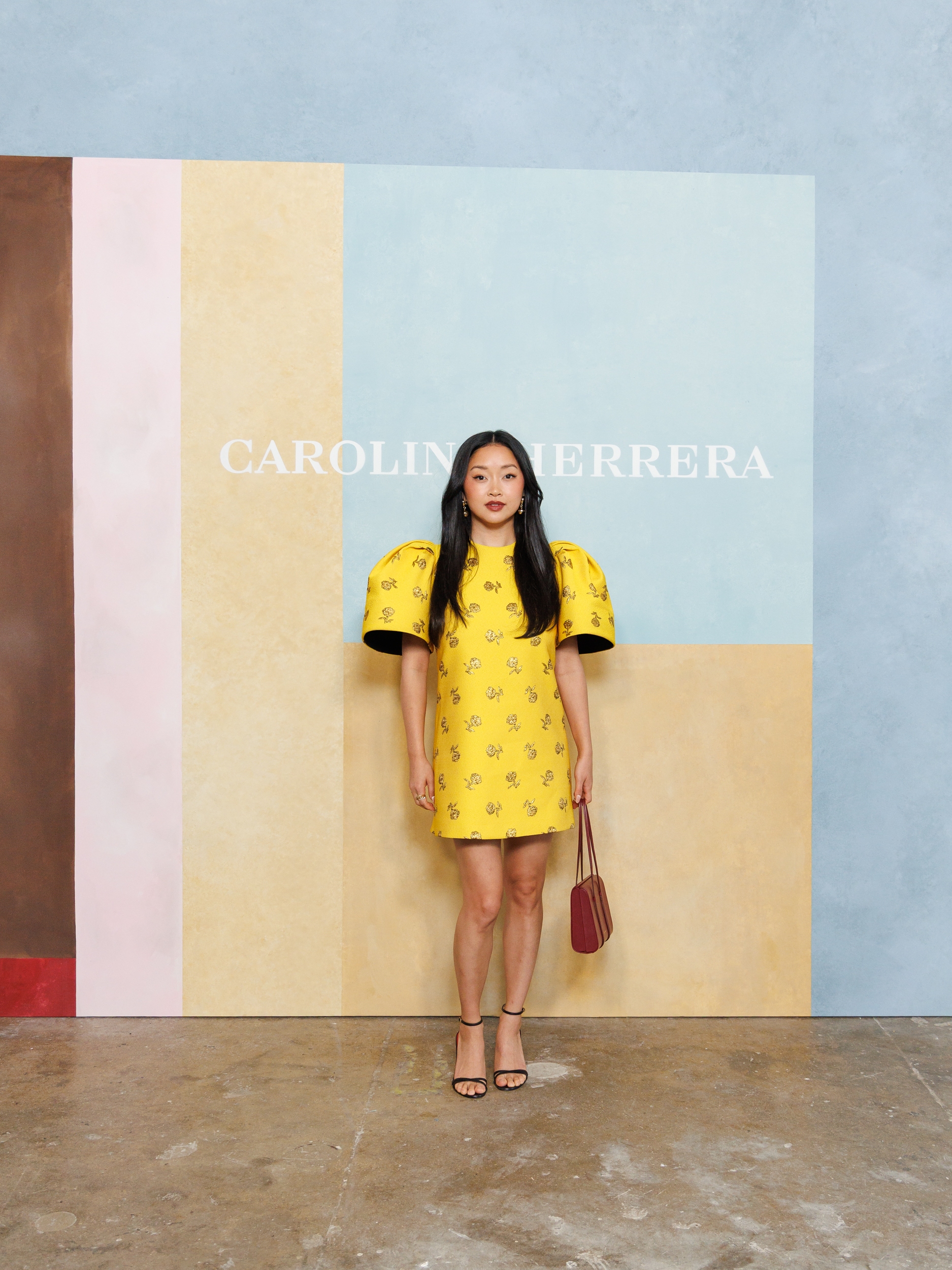
For Fall 2026, Carolina Herrera drew inspiration from a community of women, past and present, whose work and influence have shaped the landscape of art. Whether artists or muses, patrons, gallerists, curators, or collectors, they lead lives of bold self-expression, talent, and style. Wes Gordon approached the season as a tribute to this creative power and invited several of these women to walk the show in New York’s Meatpacking District.
This group included:
Painter Amy Sherald, whose portraits are defined by a singular visual language, cool tonal fields, and precise composition that reframe American realism on her own terms. Her work centers Black subjects with quiet authority, shifting the familiar into something newly seen. Her most celebrated work includes the official portrait of Michelle Obama for the Smithsonian’s National Portrait Gallery.
Anh Duong, the French-American artist recognized for a long-running self-portrait practice that uses painting as a diary-like record of personal experience and identity.
Photographer Ming Smith, the first female African American photographer to have her work acquired by MoMA, whose pioneering use of blur, light and atmosphere moves beyond documentary to capture African American life with poetic intimacy.
Sculptor Rachel Feinstein, based in Brooklyn, who is known for baroque, fantasy-leaning works that remix art history and spectacle through immersive, museum-scale installations. She most recently exhibited at The Bass Museum in Miami, where she and Gordon hosted a dinner and panel together.
Flora Currin, Feinstein’s daughter, who embodies the figure of the muse and serves as a source of inspiration to both Feinstein and her husband, painter John Currin.
Eliza Douglas, a New York-based painter and model whose work challenges conventional notions of gender and identity through abstract and figurative forms.
Gallerist Hannah Traore, founder of Hannah Traore Gallery on New York’s Lower East Side, whose program centers on emerging and underrepresented artists, with a focus on contemporary photography, painting, and conceptual practice.
The collection imagined women in motion, creating and moving through the world with conviction. Strength and volume appeared in exaggerated shoulders, cocoon coats, puff-sleeve blazers, and streamlined pencil skirts. These assertive forms were balanced by a practical, lived-in ease that echoed the rhythm of an artist’s day. The crisp Herrera button-down was reimagined as an artist’s smock, relaxed in spirit and rendered in black and white. Silk faille capes recalled Peggy Guggenheim’s eclectic personal style and sense of movement, a recurring source of inspiration this season.
Color sharpened the proposition with a palette of ceramic nude, forest green, plum, celeste blue, and chili red that tempered discipline with emotion. House codes returned through print: bold leopard jacquard, painterly calla lily motifs, and poppy florals rendered on organza. The Carolina Herrera fragrance Good Girl shoe motif appeared as an all-over hand-drawn print of the iconic perfume bottle, marking the fragrance’s ten-year anniversary with a note of wit.
Evening entered through glittering paillette knits and luminous gold coats and dresses, constructed from individual rectangular sequins that recalled the muted gold tones of artist Agnes Martin’s Friendship, a 1963 work emblematic of her restrained, meditative practice.
For Fall 2026, Wes Gordon continued his exploration of sculptural purity and architectural simplicity in handbags. Signature styles like the Mimi and Karlita returned. The Mimi was reimagined with an all-over black-and-white graphic leopard print, alongside a refined bow detail at the strap, offered in plum purple, black and forest green. The Karlita, the season’s ideal evening bag, was rendered in the collection's palette and included a striking chili red. Statement jewelry completed the narrative, with calla lily brooches and bold gold necklaces and earrings.
The show reflected the philosophy behind the Carolina Herrera for Women in the Arts initiative, a platform through which the house supports women working across various artistic disciplines. Carolina Herrera began designing because another woman believed in her — Diana Vreeland recognized her instinct and encouraged her to pursue it. That tradition of creative recognition continues through scholarships in partnership with institutions such as FIT (Fashion Institute of Technology) and NABA (Nuova Accademia di Belle Arti) in Milan and Rome, Italy, as well as support for exhibitions including Maestras at the Thyssen-Bornemisza Museum in Madrid, Spain, alongside projects in Argentina, Brazil, Chile, France, Mexico and the UK.
Images courtesy of Carolina Herrera